Japan Burari Trip offer you the best experience in Japan

On their way back from skiing or snowboarding, many people look for souvenirs at Echigo-Yuzawa Station before boarding the Shinkansen. This article selects five souvenirs based not on whether they are delicious, but on practical criteria that travelers actually need: whether they fit in a suitcase, whether they will break, and whether they have a long shelf life.
This guide provides detailed information on weight, storage requirements, and whether or not items are allowed as carry-on luggage, so it can be helpful for those who want to minimize their luggage.
Niigata Prefecture offers a variety of souvenirs, from appealing items like sake and sasa dango (bamboo leaf-wrapped rice dumplings) that are difficult to carry home, to easy-to-carry items like rice crackers. This article introduces five items for travelers, considering not only taste preferences but also four key aspects: weight and bulk, whether they should be stored at room temperature or refrigerated, whether they should be carried on board or checked baggage, and who they are suitable gifts for.
First, let's compare the features of the five items in a table. If you're short on time, you can choose based on this table alone.
| souvenir | Weight and bulkiness | Preservability | carry-on baggage | People like this |
|---|---|---|---|---|
| Rice crackers (arare/senbei) | Lightweight and compact | Can be stored at room temperature for a long period of time. | ○ You can bring your own food and drinks. | Perfect for handing out as gifts. |
| Hegisoba (dried noodles) | light | Can be stored at room temperature for a long period of time. | ○ You can bring your own food and drinks. | For people who love cooking |
| Fermented seasonings (miso and soy sauce from Niigata) | Slightly heavy | Can be stored at room temperature | △ Due to its liquid/paste consistency, it cannot be placed in checked baggage. | For people who are knowledgeable about food |
| Japanese sake | Heavy/Fragile | Can be stored at room temperature | × Always check it in as baggage. | For personal use or as a gift |
| Sasa dango (bamboo leaf-wrapped rice dumplings) | light | Requires refrigeration and has a short shelf life. | △ Suitable for short-distance travel | For eating on the spot |
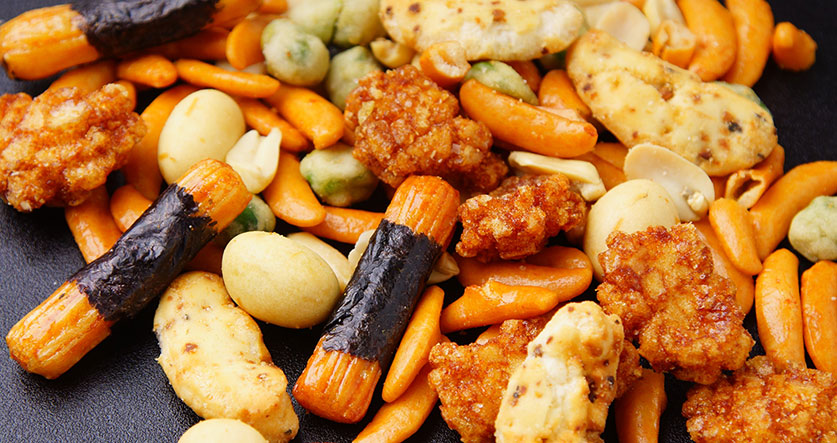
"Arare" and "senbei" are both traditional Japanese snack foods made from rice. Senbei are made by thinly rolling out rice and baking it, while arare are made by frying or baking small balls of rice, and they come in a variety of flavors such as soy sauce and salt.
Niigata Prefecture is widely known as a rice-producing region, and it is a thriving area for making rice crackers. You can find a wide variety of rice cracker products in the souvenir shops at train stations.
Takeaway Information: Many products are individually packaged, lightweight, and resistant to deformation, making them easy to pack into suitcases. Most can be stored at room temperature for extended periods and can be included in carry-on luggage.
Tips for choosing: In addition to choosing from a variety of flavors such as soy sauce, salt, and spicy, selecting a pack with many individually wrapped pieces is convenient for sharing with colleagues or friends.
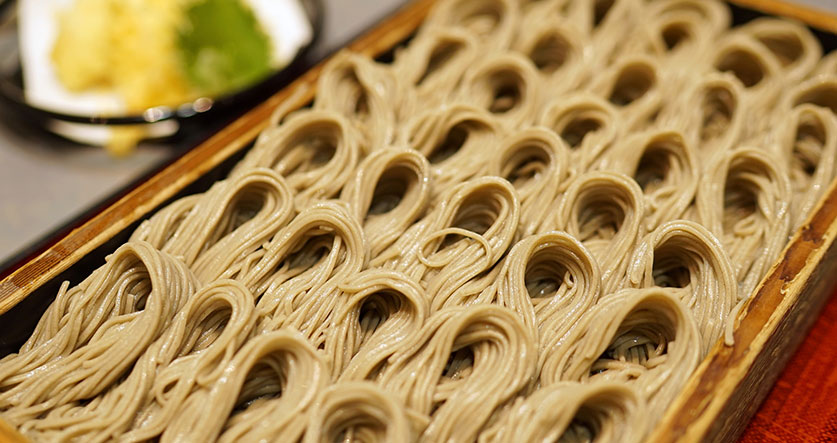
Hegi soba is a type of soba noodle that originated in the Uonuma and Tokamachi regions of Niigata Prefecture. "Hegi" refers to the square wooden container used to serve the soba, and a distinctive feature of Hegi soba is that the bite-sized portions of soba are beautifully arranged in this container. Because seaweed called "funori" is used as a binder for the noodles, they have a uniquely smooth texture.
*Hegi soba originated in the Uonuma and Tokamachi regions, not in Echigo Yuzawa.
Takeaway Information: The fresh noodles served at the restaurant require refrigeration and do not keep well, so for souvenirs, it is more practical to choose the dried noodle type, which can be stored at room temperature. Dried noodles are lightweight and can be packed in carry-on luggage.
Tips for choosing: The choice depends on whether you want dried noodles that only need to be boiled, or a set that includes soup base. This makes a great souvenir for someone who enjoys cooking.
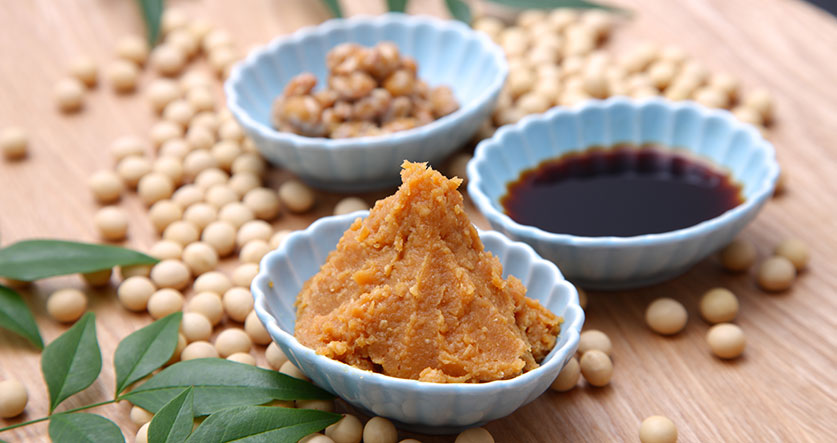
Miso and soy sauce are essential condiments in Japanese cuisine, made by fermenting soybeans, rice, and koji (rice malt). In snowy regions like Niigata Prefecture, there has long been a culture of preparing fermented foods as preserved food for the winter, and each region produces its own unique miso and soy sauce.
Takeaway Information: While it can be stored at room temperature, its paste-like and liquid consistency means it must be placed in checked baggage rather than carried on board. To prevent leakage during transport, in addition to the original plastic packaging, we recommend placing it in a resealable bag or wrapping it in clothing.
Tips for choosing: Choose based on whether you want a sweet or spicy flavor, and whether you want a large commercial-sized or small single-serving size. Avoid making definitive statements about the taste or effects of specific products, and instead, check the ingredients listed on the packaging. These make great souvenirs for people interested in food culture.
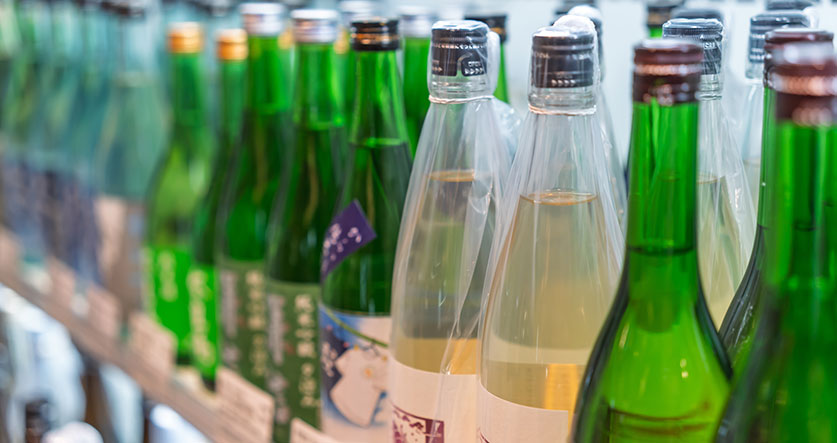
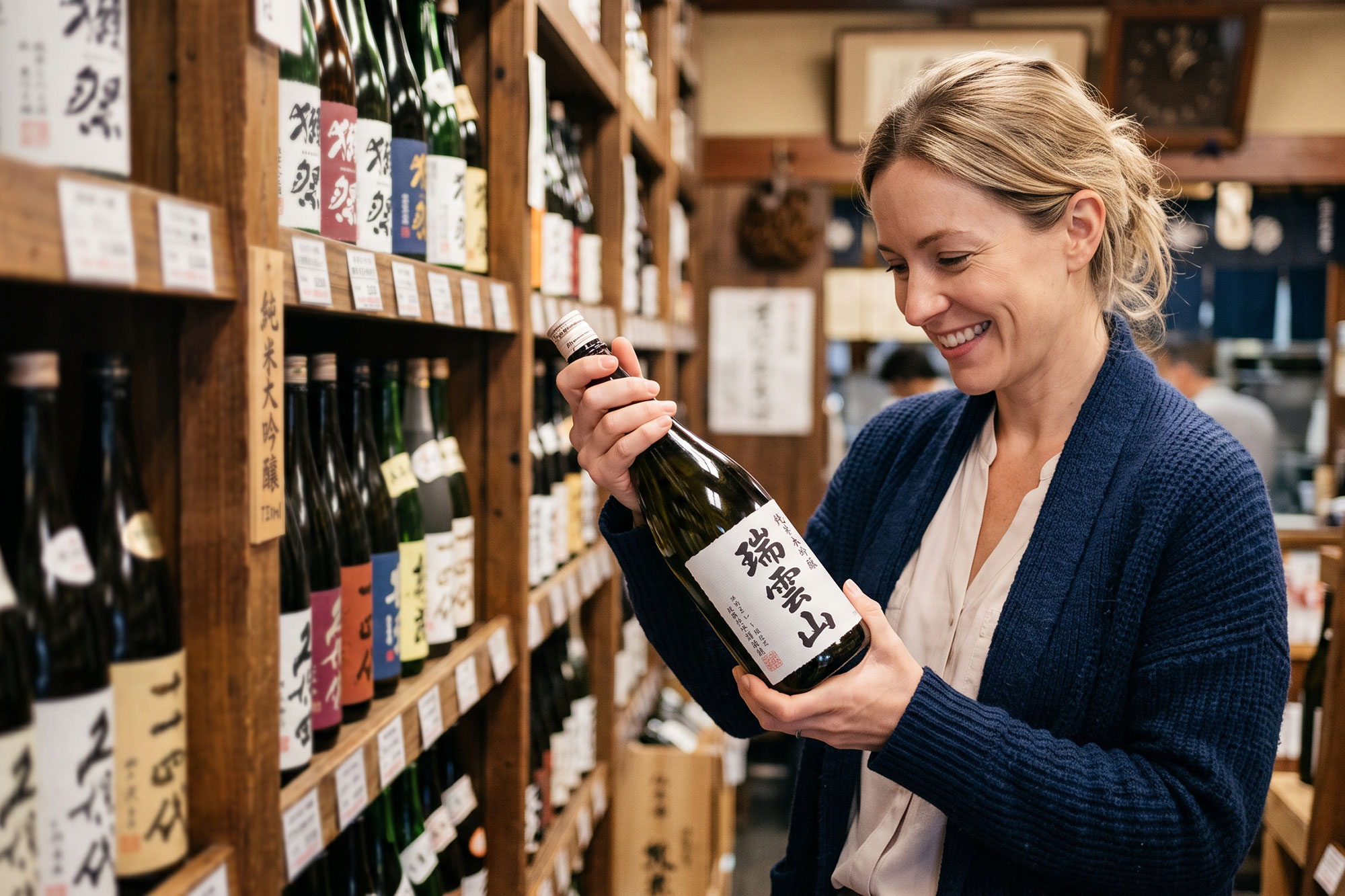
Sake is an alcoholic beverage made by fermenting and brewing rice and water as its main ingredients. Niigata Prefecture is known as one of the leading sake-producing regions, and its abundant snowmelt water and climate, which is suitable for growing rice for sake brewing, support its sake production.
Information for taking it home: Because it is a liquid in a glass bottle, it is heavy and there is a risk of breakage. Be sure to put it in your checked baggage. If the store where you purchased it provides cushioning material or a special packaging box, use that and place it in the middle of your suitcase wrapped in clothes for safety. Full bottles (such as 1.8L bottles) are especially bulky, so choosing smaller bottles such as 720ml bottles or cup sake will make them easier for travelers to handle.
Tips for choosing: To avoid disappointment, try tasting sake at the sake tasting counter at "Ponshukan" (described later) before purchasing to find your preferred taste (dry, sweet, etc.). It's best not to judge brands as superior or inferior, but rather to choose based on whether it suits your own palate.
*Please note that sake is subject to liquid restrictions for carry-on baggage, so be sure to pack it in your checked baggage. If you purchased it duty-free, there may be conditions such as not opening it until departure. Please see the next chapter for details.
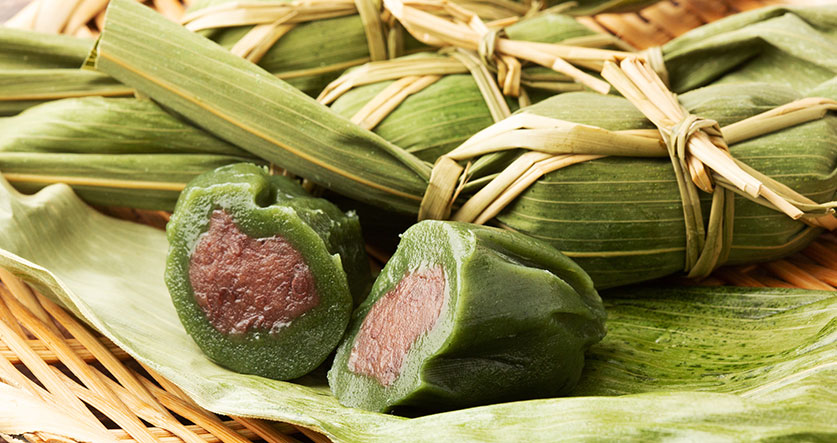
Sasa Dango is a traditional Niigata confection made from green mochi rice cakes kneaded with mugwort, filled with sweet red bean paste, wrapped in bamboo leaves, and steamed. It is characterized by its simple sweetness infused with the aroma of bamboo leaves, and is a popular and classic souvenir from Niigata.
Takeaway Information: As this is a fresh confection, it requires refrigeration and has a shorter shelf life compared to other souvenirs. To be honest, it's not really suitable for long-distance or long-duration transport. Some stores also carry frozen or vacuum-packed versions that have a longer shelf life. (Availability varies by store, so please check when purchasing.)
Tips for choosing: It's recommended to choose small packs with a number of items that can be consumed within the day, and buy them with the understanding that they are "for you or your family to eat on the spot or at your accommodation."
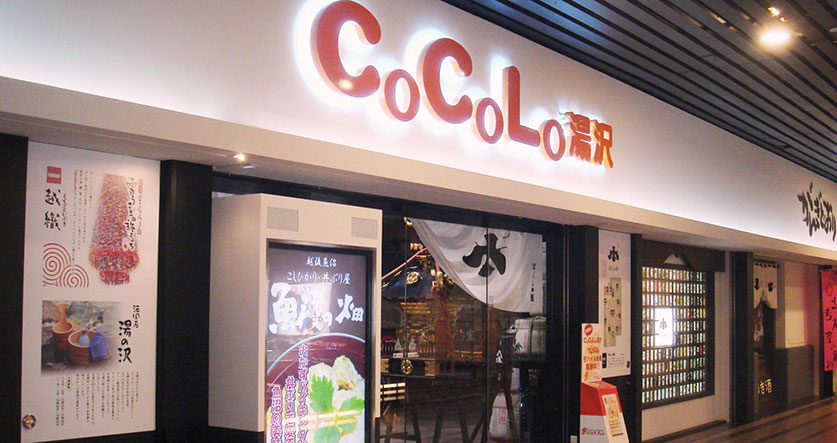
All five items introduced so far can be purchased at "CoCoLo Yuzawa," a shopping complex located inside Echigo-Yuzawa Station, while you're waiting for your Shinkansen train.
| item | Contents |
|---|---|
| access | Right outside the ticket gate at JR Echigo-Yuzawa Station |
| Opening hours | This varies by store. Please check the CoCoLo Yuzawa official website for details. |
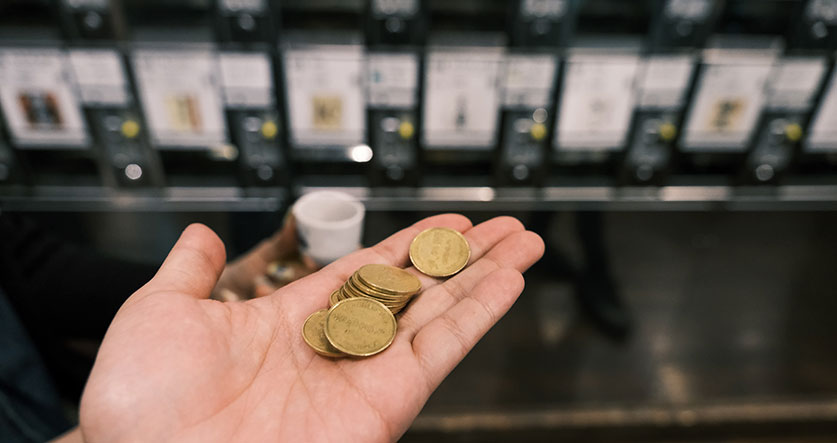
In particular, "Ponshukan Echigo Yuzawa Station Store" is a store that handles sake, rice crackers, and fermented seasonings such as miso and soy sauce all in one place, allowing you to see many of the items introduced in this article all at once. At the adjoining "Kikizake Bansho" (sake tasting station), you can purchase coins to compare and taste sake from Niigata Prefecture, which is especially convenient for tourists visiting Japan as you can try before you buy.
| item | Contents |
|---|---|
| access | Inside Echigo-Yuzawa Station, inside CoCoLo Yuzawa |
| Opening hours | 9:00 AM - 7:00 PM / 7:30 PM (Hours may vary depending on the season. Please check the official website for the latest opening hours.) |
| Sake tasting station | For 1,000 yen, you can exchange it for a sake cup and 5 coins, and then sample up to 5 different sakes from local breweries. |
| Tax-free | Available (Tax Free Shop) |
Almost all souvenirs can be found within the station itself, making Echigo-Yuzawa Station incredibly convenient – you can get everything you need while waiting for your Shinkansen.
Food import rules vary greatly from country to country, and some items may be restricted or prohibited. In particular, some countries have strict regulations regarding plant-based foods and fresh produce.
Before purchasing souvenirs, please be sure to check the latest regulations on the official website of your country's customs and quarantine authorities.
Also, sake and liquid condiments are subject to liquid restrictions for carry-on baggage, so please put them in your checked baggage. If you purchase them duty-free, there may be conditions such as not opening them until departure.
*The information in this article is current as of August 17, 2026.
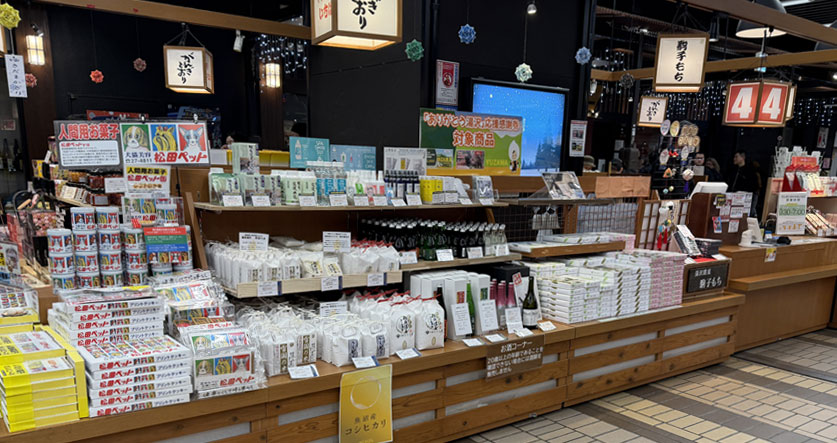
When choosing souvenirs from Echigo Yuzawa, you can't go wrong by considering not only "deliciousness" but also "ease of carrying." For handing them out to many people, choose light and long-lasting rice crackers; for cooking enthusiasts, dried hegi soba noodles; for food connoisseurs, fermented seasonings; for yourself or as gifts, sake; and for enjoying sasa dango on the spot. By choosing based on the characteristics of each item, you can avoid waste in your suitcase and ensure a satisfying trip.
At CoCoLo Yuzawa and Ponshukan, both directly connected to the station, you can enjoy all of these things while waiting for your Shinkansen train. If you're visiting the Echigo Yuzawa area for skiing or snowboarding, be sure to stop by with a little extra time before your return trip.
See also other articles about the Echigo-Yuzawa area: Echigo-Yuzawa Station Gourmet & Souvenir Guide / Yuzawa Onsen Day Trip Guide