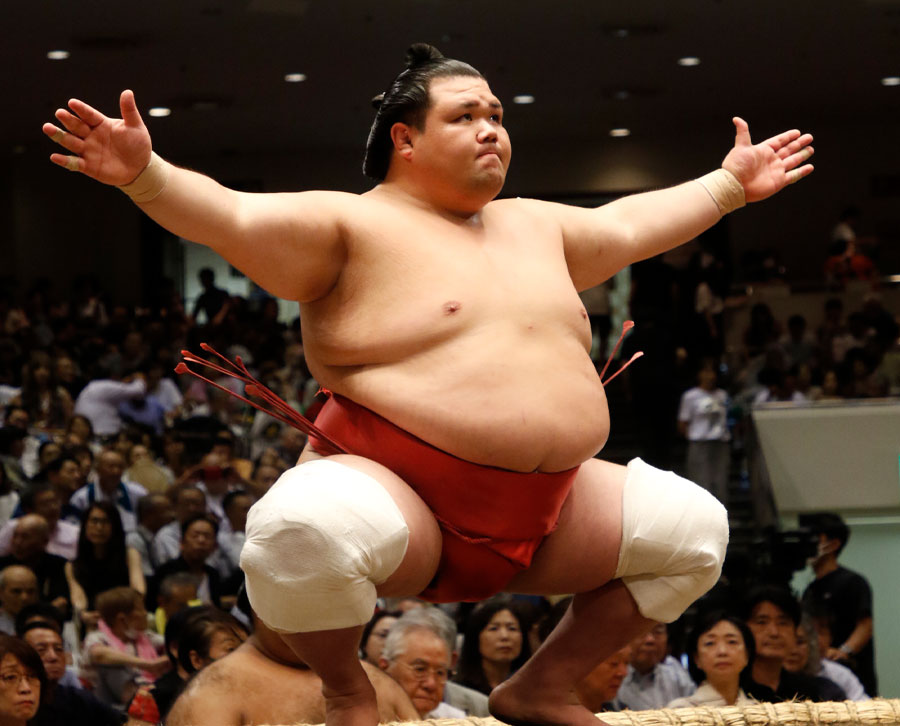

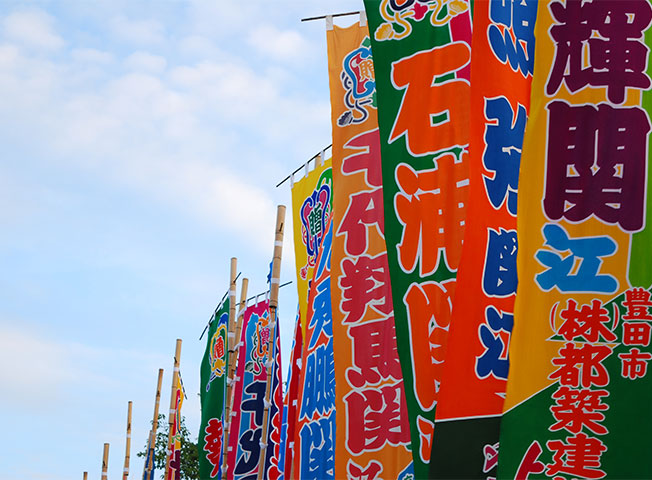
Recommended points

Tickets will be handed out on the day of the event

Tickets will be handed over to you at the venue on the day of the event, so you can make a reservation even if you are traveling and cannot receive them by mail!
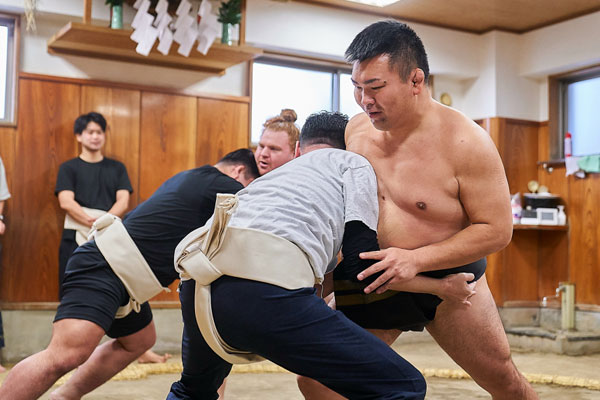
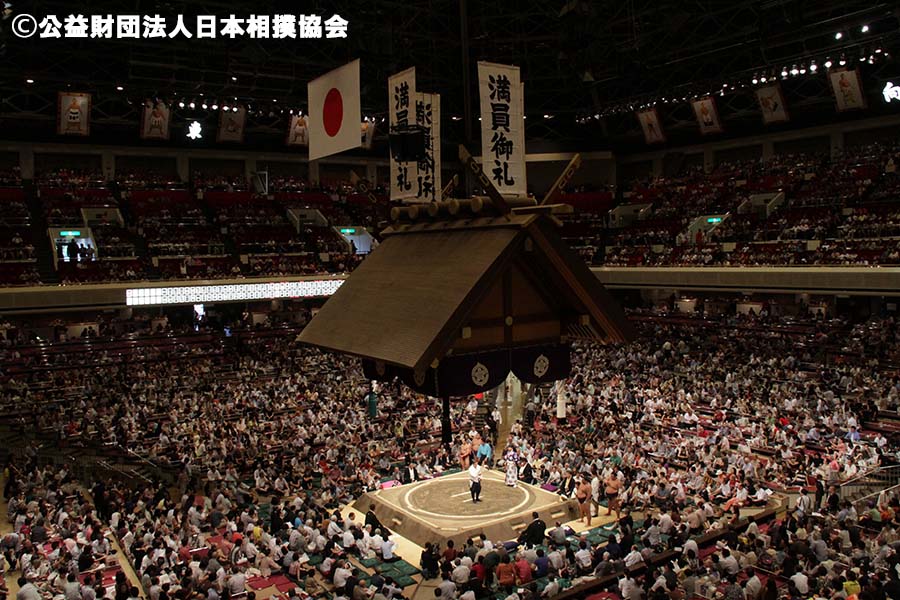
Experience sumo culture while watching Grand sumo!

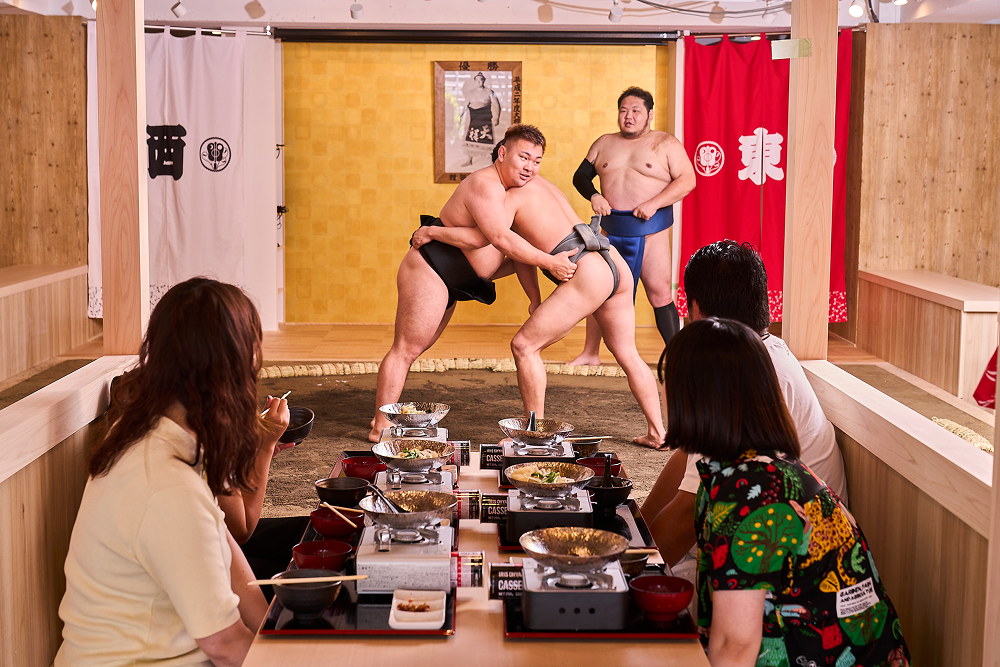
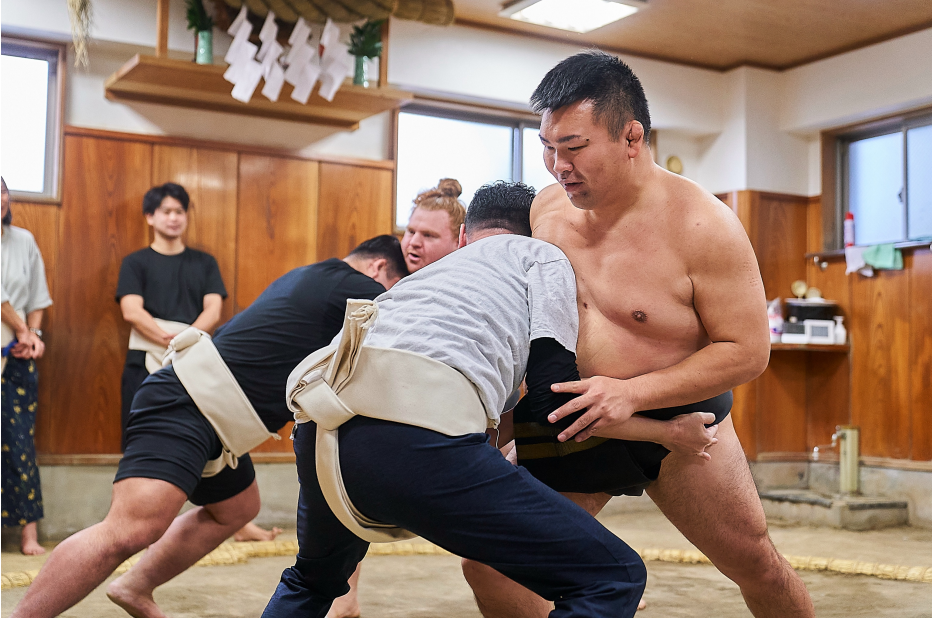
We offer a plan that allows you to enjoy sumo wrestling alongside sumo wrestlers at a sumo stable, experience what sumo wrestlers eat, and more, all while watching Grand sumo match!
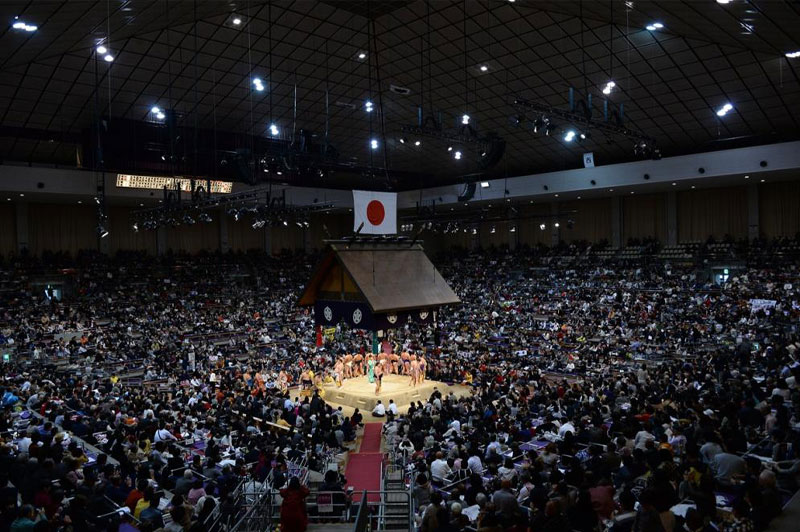
Secure your hard-to-get tickets!

We have secured a large number of tickets to the hugely popular Grand sumo wrestling event! We have the purchasing power that only a Japanese travel agency can offer.

Choose your preferred month for attending Grand sumo tournament.

Applies to all plans
  • Includes tickets to watch Grand sumo wrestling.
  • Meet at the venue and disperse at the venue (transportation is not provided).

Sales Ended

January Tournament Schedule

1st
1/11(日)
2日目
1/12(月)
3日目
1/13(火)
4日目
1/14(水)
5日目
1/15(木)
6日目
1/16(金)
7日目
1/17(土)
8日目
1/18(日)
9日目
1/19(月)
10日目
1/20(火)
11日目
1/21(水)
12日目
1/22(木)
13日目
1/23(金)
14日目
1/24(土)
Final
1/25(日)

access

map

2 minutes walk from the west exit of Ryogoku Station on the JR Sobu Line

Exit the west exit of JR Sobu Line Ryogoku Station and turn right. You will see Ryogoku Station Hirokoji directly ahead. Go past Ryogoku Station Hirokoji on your left and you will see the entrance to Ryogoku-Kokugikan on your right.

5 minutes walk from Ryogoku Station on the Toei Subway Oedo Line

After leaving the A3 Exit of Ryogoku Station on the Oedo Line, head left along Kiyosumi-dori. Turn left just before Yamaoka Shoten. When you reach the T-junction where the APA Hotel is located, turn left. If you continue straight you will come out onto Kokugikan-dori Street, so turn left and you will find Ryogoku-Kokugikan.

Sales Ended

March Tournament Schedule

1st
3/8(日)
2日目
3/9(月)
3日目
3/10(火)
4日目
3/11(水)
5日目
3/12(木)
6日目
3/13(金)
7日目
3/14(土)
8日目
3/15(日)
9日目
3/16(月)
10日目
3/17(火)
11日目
3/18(水)
12日目
3/19(木)
13日目
3/20(金)
14日目
3/21(土)
Final
3/22(日)

access

map

Approximately 5 minutes walk from Exit 5 of Namba Station on all subway lines

Approximately 5 minutes walk from the south exit of Nankai Namba Station

Sales Ended

May Tournament Schedule

1st
5/10(日)
2日目
5/11(月)
3日目
5/12(火)
4日目
5/13(水)
5日目
5/14(木)
6日目
5/15(金)
7日目
5/16(土)
8日目
5/17(日)
9日目
5/18(月)
10日目
5/19(火)
11日目
5/20(水)
12日目
5/21(木)
13日目
5/22(金)
14日目
5/23(土)
Final
5/24(日)

access

map

2 minutes walk from the west exit of Ryogoku Station on the JR Sobu Line

Exit the west exit of JR Sobu Line Ryogoku Station and turn right. You will see Ryogoku Station Hirokoji directly ahead. Go past Ryogoku Station Hirokoji on your left and you will see the entrance to Ryogoku-Kokugikan on your right.

5 minutes walk from Ryogoku Station on the Toei Subway Oedo Line

After leaving the A3 Exit of Ryogoku Station on the Oedo Line, head left along Kiyosumi-dori. Turn left just before Yamaoka Shoten. When you reach the T-junction where the APA Hotel is located, turn left. If you continue straight you will come out onto Kokugikan-dori Street, so turn left and you will find Ryogoku-Kokugikan.

Sales Ended

July Tournament Schedule

1st
7/12(日)
2日目
7/13(月)
3日目
7/14(火)
4日目
7/15(水)
5日目
7/16(木)
6日目
7/17(金)
7日目
7/18(土)
8日目
7/19(日)
9日目
7/20(月)
10日目
7/21(火)
11日目
7/22(水)
12日目
7/23(木)
13日目
7/24(金)
14日目
7/25(土)
Final
7/26(日)

access

map

About 1 minute walk from Meijo Park Station on the Nagoya Municipal Subway Meijo Line
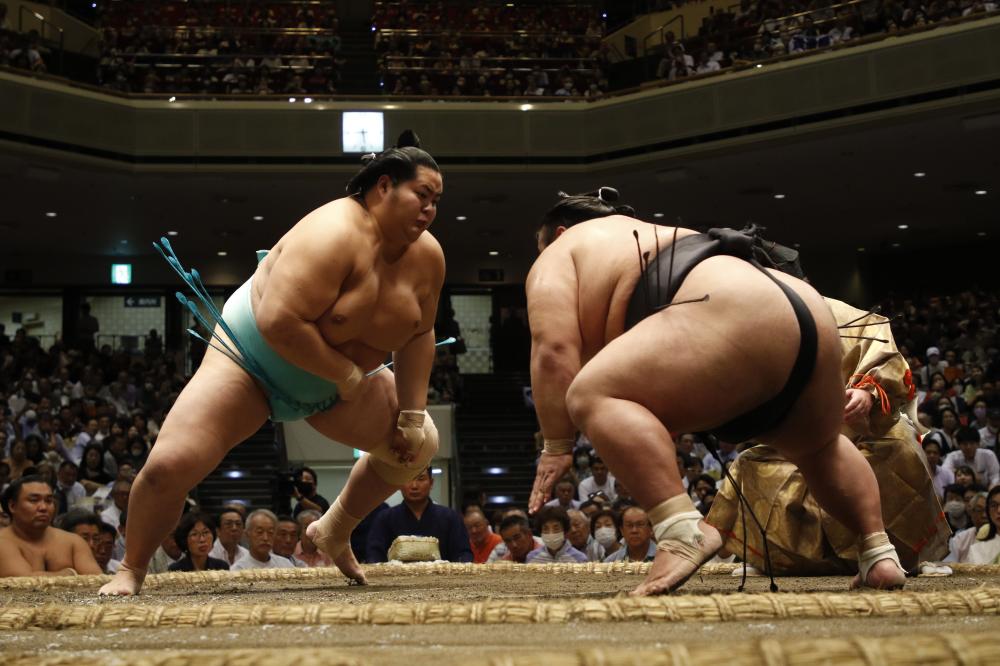
Grand Sumo Tournament Viewing &  sumo merchandise

Chair C seat sumo goods
Meeting place:Ryogoku-Kokugikan
12:00~18:00
🗣Japanese / English
Spectator tickets/Seated C seats
Sumo goods
Transportation costs to the venue
Dates: September14,17, 20, 22, 23, 24
¥ 13,000-14,000/ person

Sales Ended

Grand Sumo Tournament Viewing & Final Day Closing Party

Final performance party Dinner included
Meeting place: Ryogoku-Kokugikan (approximately 1 minute walk from JR Ryogoku Station)
13:00〜21:00
🗣Japanese / English
Spectator tickets
Final performance party
Dinner
Souvenir from the Sumo Stable
Transportation costs to the venue
Date: 9/27
¥ 40,000/ person

Sales Ended

Grand Sumo Tournament Viewing & SUMOLAND Sumo Experience

相撲体験 Lunch included
Meeting place:SUMOLAND Ryogoku (approximately 3 minutes on foot from JR Ryogoku Station)
11:00〜18:00
🗣Japanese / English
Spectator tickets
Sumo experience
Chanko nabe lunch
Transportation costs to the venue
Event dates: September 20th,September 22nd-24th
¥ 31,700/ person

Sales Ended

Grand Sumo Tournament Viewing & Morning Practice in Tokyo

Morning practice viewing Lunch included
Meeting place:Asahi Fuji Dojo (approximately 4 minutes on foot from Sumiyoshi Subway Station)
11:00〜18:00
🗣Japanese / English
Spectator tickets
Sumo morning practice experience
Sumo wrestler's lunch
Transportation costs to the venue
Dates: 9/149/179/22-24
¥ 31,700/ person

Sales Ended

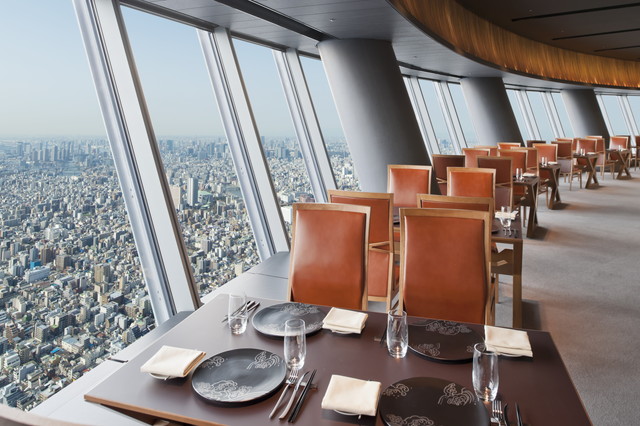
Grand Sumo Tournament Viewing & Sky Restaurant 634 Dinner

Skytree Dinner included
Meeting place:Ryogoku-Kokugikan
Spectator tickets
Dinner at Sky Restaurant 634
Transportation costs to the venue
Dates: 9/149/209/22
¥ 42,000 ~ / person

Sales Ended

Grand Sumo Tournament Viewing A-Seat & Sky Restaurant 634 Lunch at Tokyo Skytree

Lunch at Chair A
Meeting place:Sky Restaurant 634 (inside Tokyo Skytree)
11:30~18:00
🗣Japanese / English
Spectator tickets / Chair A seats
French course lunch
Transportation costs to the venue
Date: September 25th
¥ 34,000/ person

September Tournament Schedule

1st
9/13(日)
2日目
9/14(月)
3日目
9/15(火)
4日目
9/16(水)
5日目
9/17(木)
6日目
9/18(金)
7日目
9/19(土)
8日目
9/20(日)
9日目
9/21(月)
10日目
9/22(火)
11日目
9/23(水)
12日目
9/24(木)
13日目
9/25(金)
14日目
9/26(土)
Final
9/27(日)

access

map

2 minutes walk from the west exit of Ryogoku Station on the JR Sobu Line

Exit the west exit of JR Sobu Line Ryogoku Station and turn right. You will see Ryogoku Station Hirokoji directly ahead. Go past Ryogoku Station Hirokoji on your left and you will see the entrance to Ryogoku-Kokugikan on your right.

5 minutes walk from Ryogoku Station on the Toei Subway Oedo Line

After leaving the A3 Exit of Ryogoku Station on the Oedo Line, head left along Kiyosumi-dori. Turn left just before Yamaoka Shoten. When you reach the T-junction where the APA Hotel is located, turn left. If you continue straight you will come out onto Kokugikan-dori Street, so turn left and you will find Ryogoku-Kokugikan.

Under preparation

November Tournament Schedule

1st
11/9(日)
2日目
11/10(月)
3日目
11/11(火)
4日目
11/12(水)
5日目
11/13(木)
6日目
11/14(金)
7日目
11/15(土)
8日目
11/16(日)
9日目
11/17(月)
10日目
11/18(火)
11日目
11/19(水)
12日目
11/20(木)
13日目
11/21(金)
14日目
11/22(土)
Final
11/23(日)

access

map

For those arriving by train

・About 12 minutes walk from the subway "Gofuku Station"

For those arriving by bus

・Hakata Station (Hakata Exit) → Hakata Station Nishi-Nippon City Bank Front F Platform (No. 99) Approx. 11 minutes → Get off in front of International Center Sun Palace, short walk
・Hakata Station (Hakata Exit) → Hakata Station Nishi-Nippon City Bank Front Platform F (No. 88 BRT) approx. 11 minutes → Get off in front of the International Conference Center Sun Palace, short walk

Check it out alongside the Grand Tournament

Enjoy Sumo Beyond the Main Basho — “Grand Sumo Touring Shows”

On tour, you can get much closer to the wrestlers, watch their morning training, and enjoy special fan‑interaction events — experiences you won’t find at the official tournaments.

Knowing this will make sumo even more enjoyable
Basic knowledge of sumo

Basic knowledge of sumo

What is Sumo?

Sumo is a traditional Japanese martial art and sacred sport that originated in Shinto rituals.
In ancient times, it was held as a religious ceremony to pray for a bountiful harvest, and the outcome of the sumo wrestlers' matches was believed to represent the will of the gods.
Due to this religious background, ceremonial actions such as entering the ring and throwing salt are still considered important, and a solemn atmosphere permeates the atmosphere before and after competitions.
Culturally, sumo has been an integral part of Japanese life for over a thousand years.
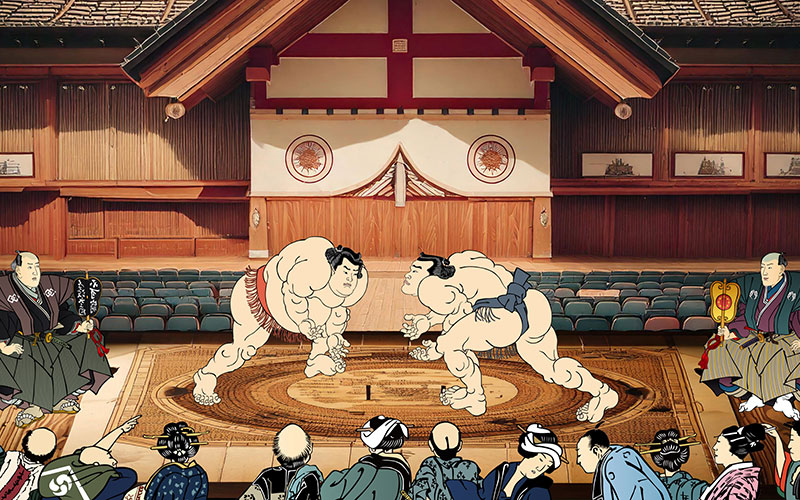
It developed as a court event during the Heian period, as entertainment for the common people during the Edo period, and is now a beloved national sport.
The wrestlers' topknots, mawashi and movements are imbued with traditional beauty, and spectators respect the formality and etiquette.

The history of sumo

The origins of sumo, Japan's national sport, can be traced back to the age of mythology, and it is said to have begun as a test of strength.
Sumo wrestling was performed annually as a court ritual to predict the year's harvest, and continued for about 300 years. Later, during the Sengoku period (Warring States period), it was used as training for samurai warriors.
Later, during the Edo period, sumo wrestling became a form of entertainment, with fundraising sumo tournaments being held, laying the foundation for modern Grand sumo.
Grand sumo, now established as a sport, is loved by many people.
At the venue, you can experience firsthand the long history and traditional cultural aspects of sumo wrestling.

What is a sumo wrestler?

Sumo wrestlers are professional competitors in the traditional Japanese martial art of sumo.
Its origins lie in ancient Shinto rituals, which were performed as a prayer for a bountiful harvest.
During the Heian period, it became a court event, and during the Edo period it developed as entertainment for the common people. Today's sumo wrestlers undergo rigorous training and are ranked according to a hierarchy.
Sumo wrestlers are not just athletes, but also bear the role of inheritors of etiquette and traditional culture.
Deep meanings are also embedded in the topknots, mawashi, and mannerisms.

Sumo wrestlers are athletes who possess not only weight but also flexibility and explosive power.
Despite his physique, he can split his legs incredibly wide, instantly disrupting his opponent's balance.
When you see it up close, its movements will likely be different from what you imagine.

When and where sumo is held

Sumo tournaments are held six times a year in odd-numbered months.
January is Tokyo, March is Osaka, May is Tokyo, July is Nagoya, September is Tokyo, and November is Fukuoka.
Generally, matches are held every day for 15 days, starting from the second Sunday to the fourth Sunday. Wrestlers ranked Juryo and above wrestle once a day for 15 consecutive days, while wrestlers ranked Makushita and below wrestle every other day for seven days.
The wrestler with the most wins out of 15 bouts will be the winner of that tournament.

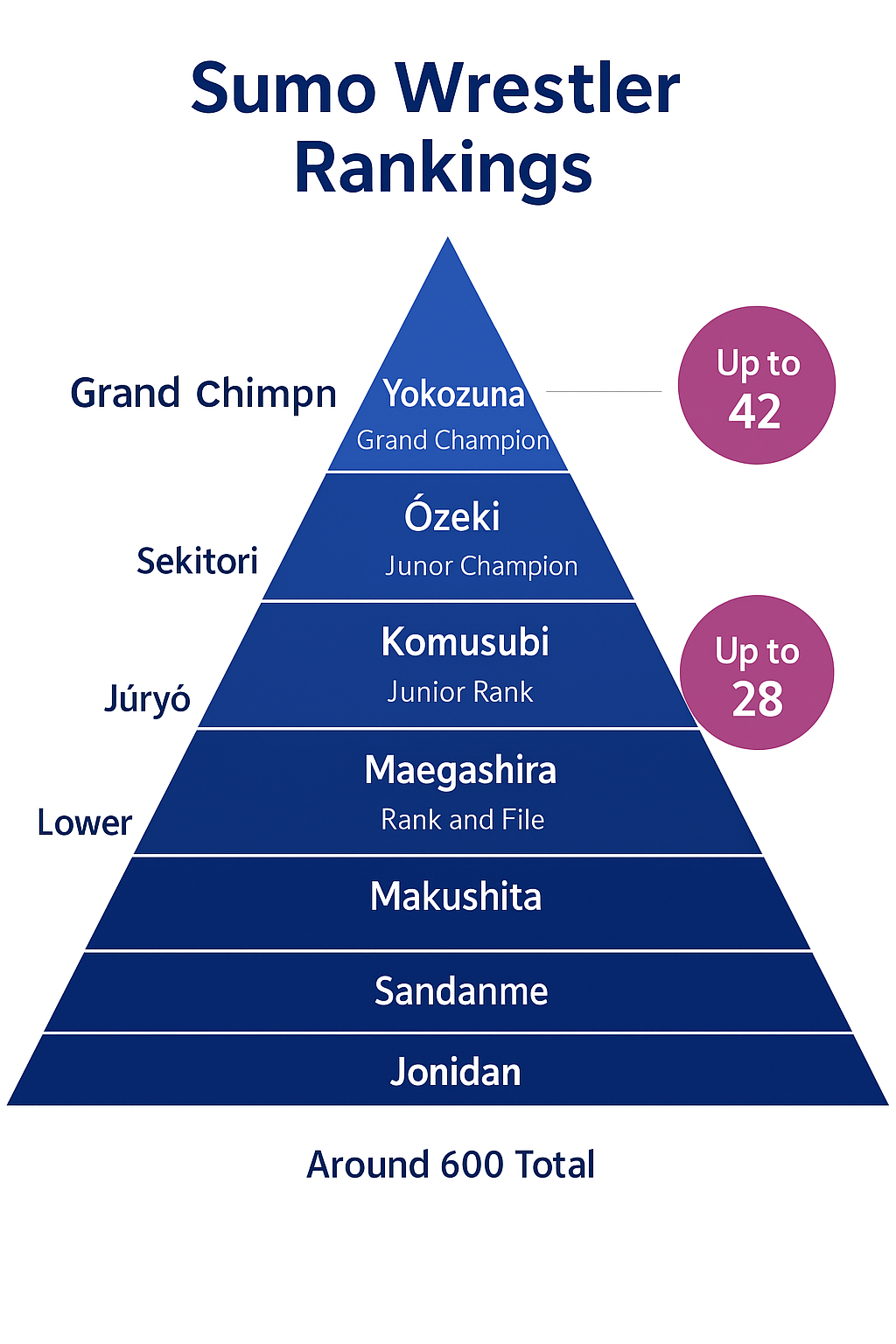
Sumo wrestler ranks

Sumo wrestlers are ranked according to a hierarchy called "banzuke."
The highest rank is "Yokozuna," and only those who are recognized for their dignity and ability can be promoted.
Next come the ranks of "Ozeki," "Sekiwake," "Komusubi," and "Maegashira," and these are collectively called "Makuuchi wrestlers."
"Makuuchi wrestlers" are broadcast on television, so they become more well-known.
Below the Makuuchi rank is the Juryo rank, and the sumo ranks of Ozeki, Sekiwake, Komusubi, Maegashira, and Juryo are all combined to form the Sekitori rank.
Sekitori are paid a salary and compete every day for 15 days at each tournament.

Below the "Juryo" rank are the "Makushita," "Sandanme," "Jonidan," and "Jonokuchi" ranks, which are the ranks for young wrestlers and newcomers.
There is no salary, and each location will have 7 days of competition out of 15 days.

Wrestlers are promoted by having more wins than losses, and demoted by having more losses than wins.
The rankings are updated at each of the six tournaments held each year to reflect the results.

This ranking system requires wrestlers to not only demonstrate technique, but also consistent performance and mental strength, and they work hard to reach the top.

Sumo viewing points and highlights

Sumo rules

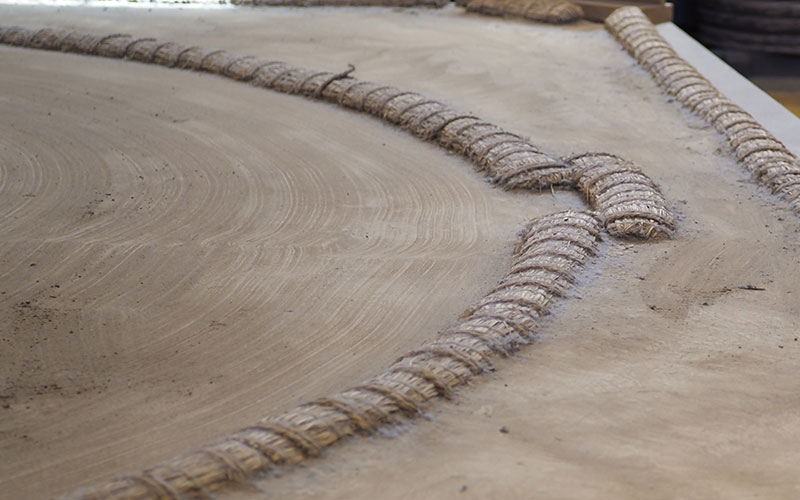
Sumo is a traditional Japanese martial art in which two wrestlers compete in a circular ring with a diameter of approximately 4.55 meters.
The rules are very simple: the one who pushes the opponent out of the ring or touches the ring with any part of their body other than the soles of their feet loses.
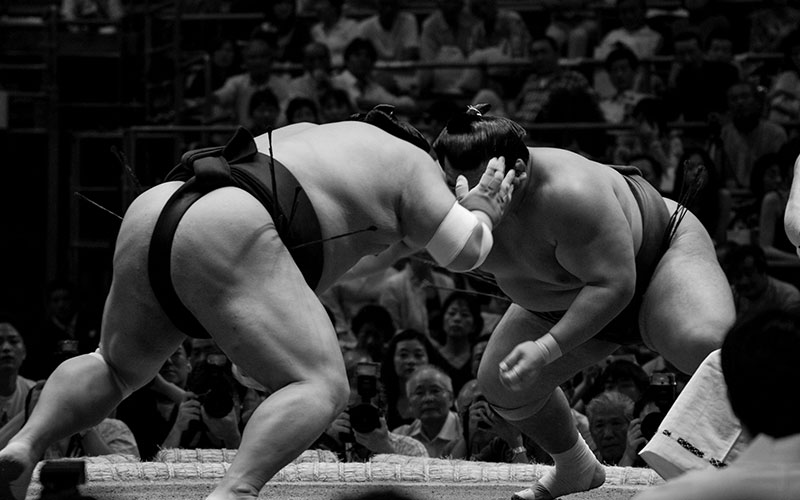
The match begins with a moment called "tachiai," when the wrestlers collide and exchange techniques.
Representative techniques include "push out," "yorikiri," and "uwade nage," and sumo wrestlers fight to make the most of their physique and special skills.
There are some actions that are prohibited, such as pulling hair, punching, or poking in the eyes, which are considered "forbidden moves" and will result in a foul.
Before the match, there is a staring contest called "shikiri," and the wrestlers perform a ritual that involves sprinkling salt to purify the ring.
These actions are imbued with sacred meaning, and sumo is not just a sport, but also has an aspect of traditional culture.
Even beginners can enjoy the techniques and tactics of the wrestlers by learning the rules.

Sumo techniques

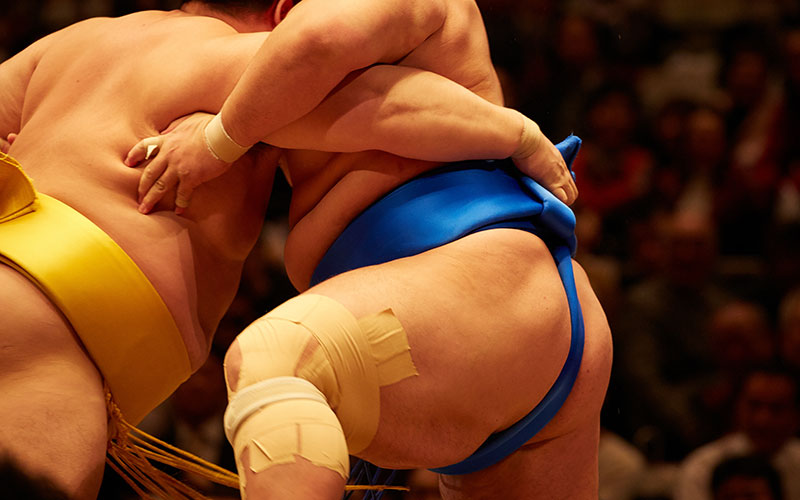
Sumo's "techniques" are the movements and tactics that wrestlers use to win, and are one of the highlights of the match.
It's not just a simple push and shove match; there are over 80 different ways to win, and the appeal lies in the tactics of strength and skill.
For example, "oshidashi" is a technique in which you push your opponent straight out of the ring, while "nagewaza" is a technique in which you twist your opponent's body to knock them down.
"Tsuridashi" is a spectacular technique in which the opponent is lifted up and carried, and there are times when it overcomes differences in physical size.
A small sumo wrestler can defeat a larger opponent with quick movements, so not only physical strength but also explosive power and judgment are important.
Knowing the types of techniques and how to use them will give you a much deeper perspective on the match.

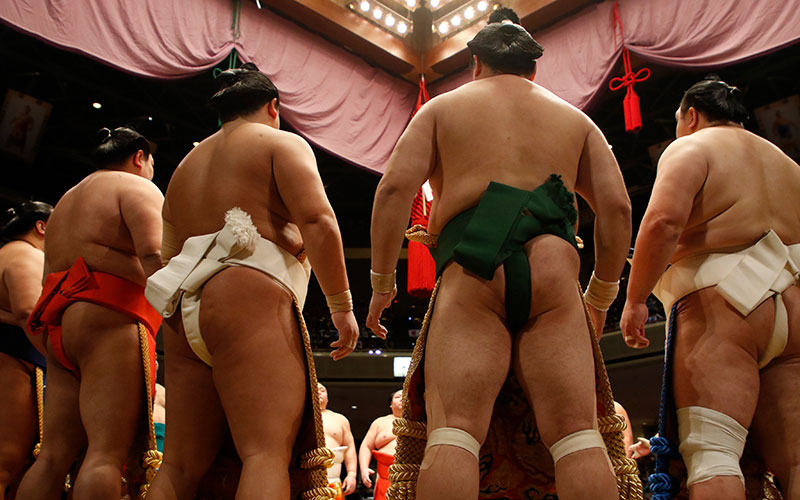
Ring-entering

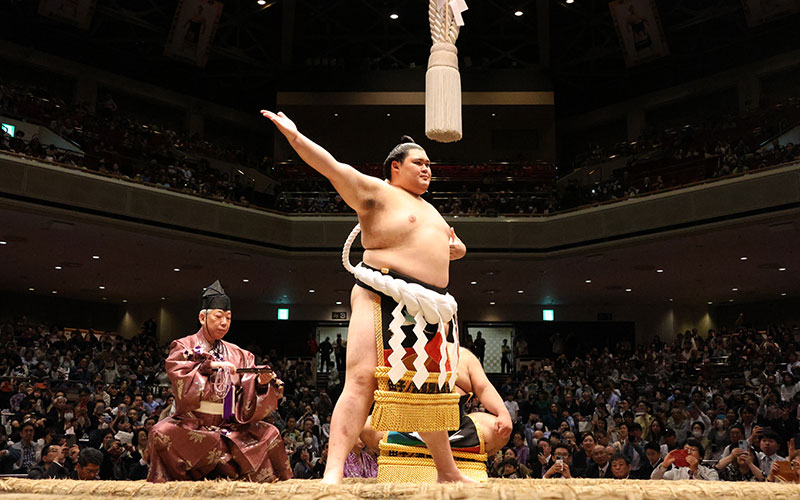
The "Dohyo-iri" in Grand Sumo is a traditional ceremony performed by sumo wrestlers on the sumo ring before a match.
This applies to sumo wrestlers of the rank of Juryo or higher (Sekitori), and it serves to show their faces to the audience and demonstrate respect in a sacred setting.
The sumo wrestlers, adorned with elaborate ceremonial aprons, step onto the sumo ring, led by the referee.
They are divided into east and west sides and line up in a circle, performing actions such as clapping their hands and raising both hands.
This is also a symbol of peace, indicating that they "do not possess weapons."
Only the Yokozuna performs a special "Yokozuna Ring-Entering Ceremony" alone, accompanied by a dew sweeper and a sword bearer, and performs the stomping ritual and demonstrates the forms.
The ring-entering ceremony is a moment where one can feel the dignity and formality of the sumo wrestlers, and it is a ritual that symbolizes the sacredness and beauty of sumo.
Even first-time viewers can appreciate the charm of sumo more deeply by learning about the meaning behind the dignified appearance and movements of the sumo wrestlers.

Etiquette and rituals before a sumo match

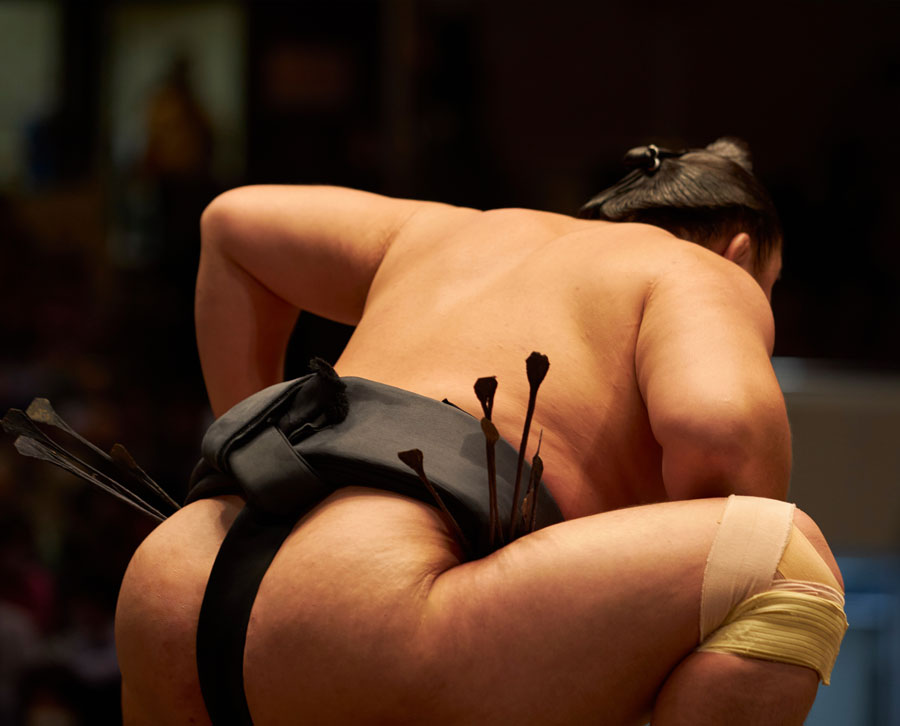
SHIKO

"Shiko" is the movement in which a sumo wrestler raises one foot high in the air and then stomps down on the ring. It is a basic training method in sumo and also a sacred gesture.
It is meant to ward off evil spirits and also serves a ritualistic role in purifying the ring.
In addition to its practical benefits of developing muscle strength and flexibility, it is also important as a symbol of mental unity and good manners.
By performing shiko before a bout, wrestlers prepare their minds and bodies, show respect for the ring, and prepare for the match.

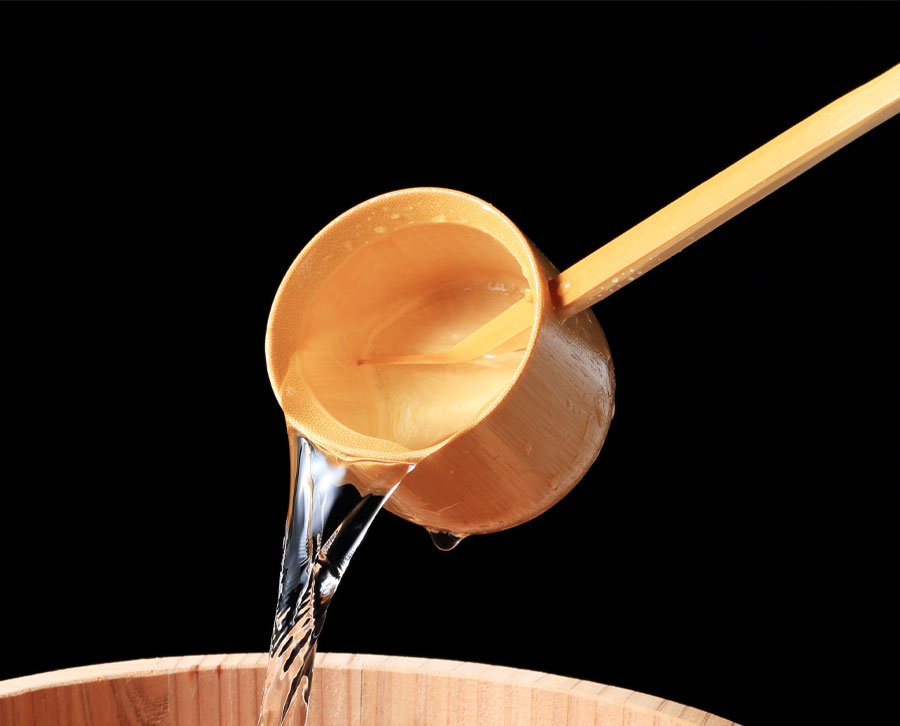
CHIKARA MIZU

"Chikara Mizu" is water that sumo wrestlers use to rinse their mouths before a match, and is a sacred ritual that signifies purification.
This is a ritualistic act to purify the body and mind and ward off evil spirits, and is a tradition unique to sumo, which is influenced by Shinto.
The wrestler on the winning side receives the water; the loser does not have the right to receive it.
The series of actions from entering the ring to starting the match are deeply rooted not only in the competition but also in etiquette and spirituality.

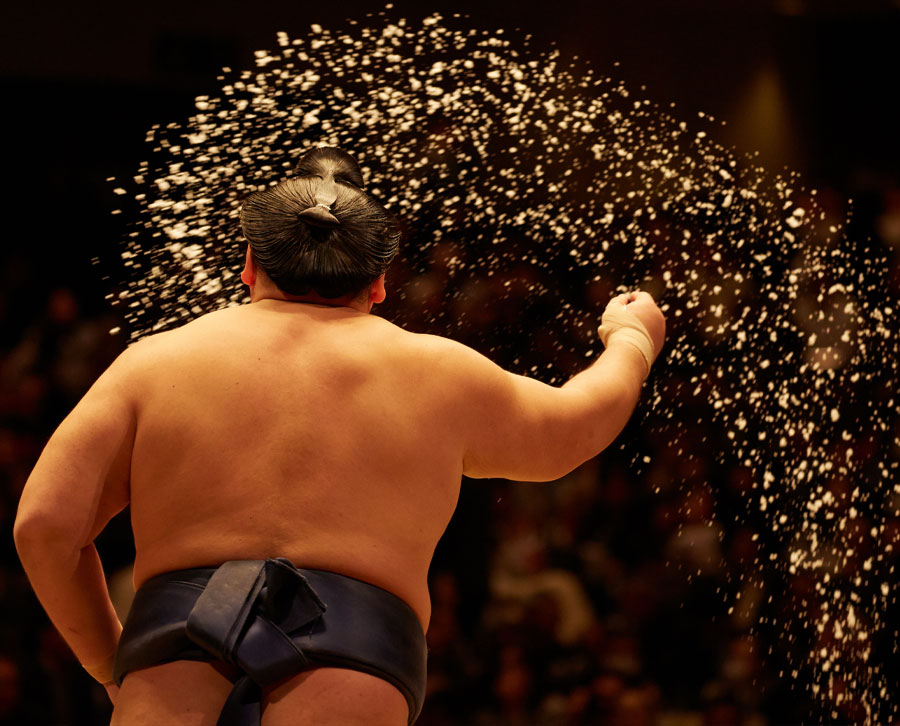
SHIO WO MAKU

"Shio wo maku" is the ritual in which sumo wrestlers sprinkle salt on the ring before the start of a match, purifying the ring and preventing injury.
This is based on the Shinto idea of purification, and by purifying the sacred ring, the wrestlers prepare both their bodies and minds for the match.
Sprinkling salt on the ground, where people are particularly prone to injury, also serves as a prayer for safety.
It is a symbolic gesture that heightens the tension before the match and is a moment that captures the attention of the audience.

CHIRI WO KIRU

"Chiri wo kiru" is a gesture that sumo wrestlers perform before the start of a match, in which they spread their arms out and then bring them back to their waists.
This signifies "not carrying a weapon" and originates from ancient etiquette.
It is a symbolic move that shows the wrestlers' determination to compete fairly, and it is also a moment of heightened tension for the spectators.
Every action on the ring has meaning, and "cutting the dust" is a ritualistic movement that evokes a particularly spiritual feeling.

FAQ

Q&A

  • Q. Is it possible to eat and drink while watching Grand sumo wrestling?

    You can eat and drink at your seat. You cannot bring in bottles, cans, or food from outside, but the venue will be selling soft drinks such as tea and juice, as well as alcoholic beverages such as beer and chuhai.

  • Q. Is it okay to take videos or photos?

    Generally, photography is permitted, but flash photography is prohibited. Please be considerate and take care not to disturb other spectators.

  • Q. What are the proper manners to observe when watching Grand sumo wrestling?

    Sumo matches often end in just a few seconds, so please do not move from your seat during the match, as people behind you may miss the moment of victory or defeat.
    Just before the match begins, watch the match quietly without making any noise.

  • Q. Are there any dress code regulations for watching Grand sumo wrestling?

    Dress code is optional and there are no particular regulations.
    Please avoid wearing large hats that may block the view of other spectators.