
GRAND SUMO REGIONAL TOUR

Grand Sumo Regional tour Ticket Package
A special type of performance called a "Regional tour (jungyo)" that is completed in a single day.
| ◆ A "Regional tour (jungyo)" is a sumo tournament held in various locations throughout Japan, separate from the main tournaments held in Tokyo, Osaka, Nagoya, and Fukuoka. You can enjoy not only the matches between Makushita and Makuuchi sumo wrestlers, but also observe their training sessions and see performances not found in official tournaments, such as Shokkiri and Sumo Jinku. |
|---|
What is a Regional tour (jungyo)? How does it differ from a regular tournament?
A jungyo is a regional sumo tour held in cities across Japan, separate from the "honbasho" (main tournaments) which take place six times a year in Tokyo, Osaka, Nagoya, and Fukuoka. While honbasho lasts for 15 days, jungyo lasts for about three weeks, with the venue changing daily. Jungyo are characterized by the opportunity to watch training sessions and special performances that are not seen at honbasho.
| Honbasho (Grand Tournament) | Jungyo (Regional Tour) | |
|---|---|---|
| Duration | 15-day run | Approximately 3 weeks (held at a different location each day) |
| Venue | Four cities: Tokyo, Osaka, Nagoya, and Fukuoka | From all over Japan |
| Months held | January, March, May, July, September, November | Four times a year: spring, summer, autumn and winter |
| Observing practice | Not possible | Open practice session can be viewed from around 9:00 to 11:00. |
| Special performance | The three top-ranking sumo wrestlers appear together, the final day's awards ceremony, etc. | Shokkiri (comic sumo), sumo jinku (traditional sumo folk songs), yagura-daiko drumming, and a live topknot (oicho-mage) styling demonstration. |
*The above information is general and based on the Japan Sumo Association's official website, "A Day in the Life of a Tour" (https://www.sumo.or.jp/Jungyo/timetable/). Actual schedules may vary depending on the specific tour and venue.
Highlights of the Regional tour (jungyo)
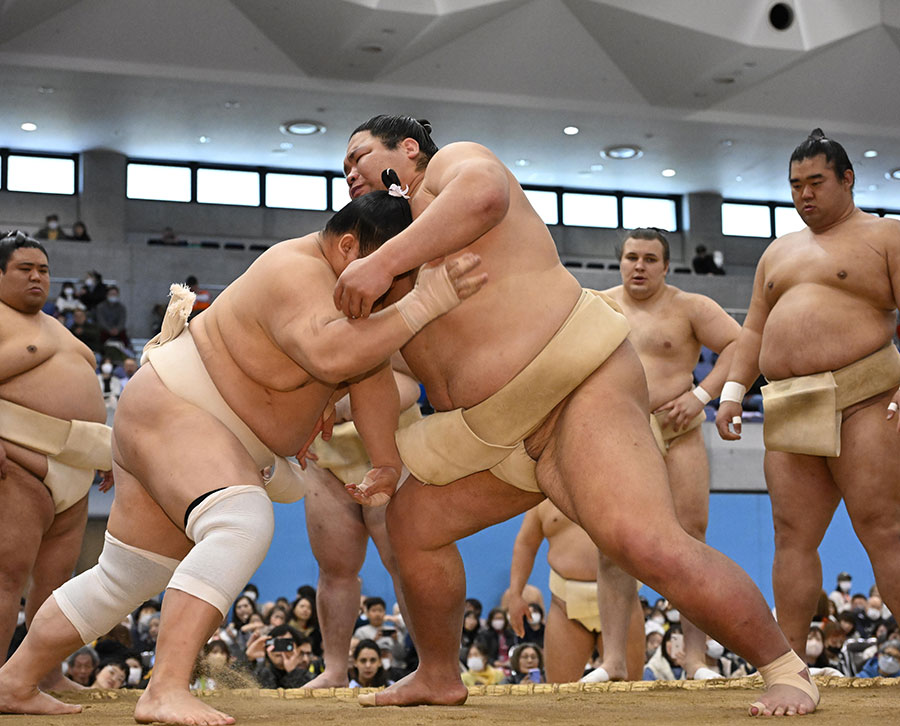
Practice can be observed
During the regional tour (jungyo), you can watch the sumo wrestlers practice up close during the open training sessions (around 9:00-11:00). This is a sight you can't see at the main tournaments.
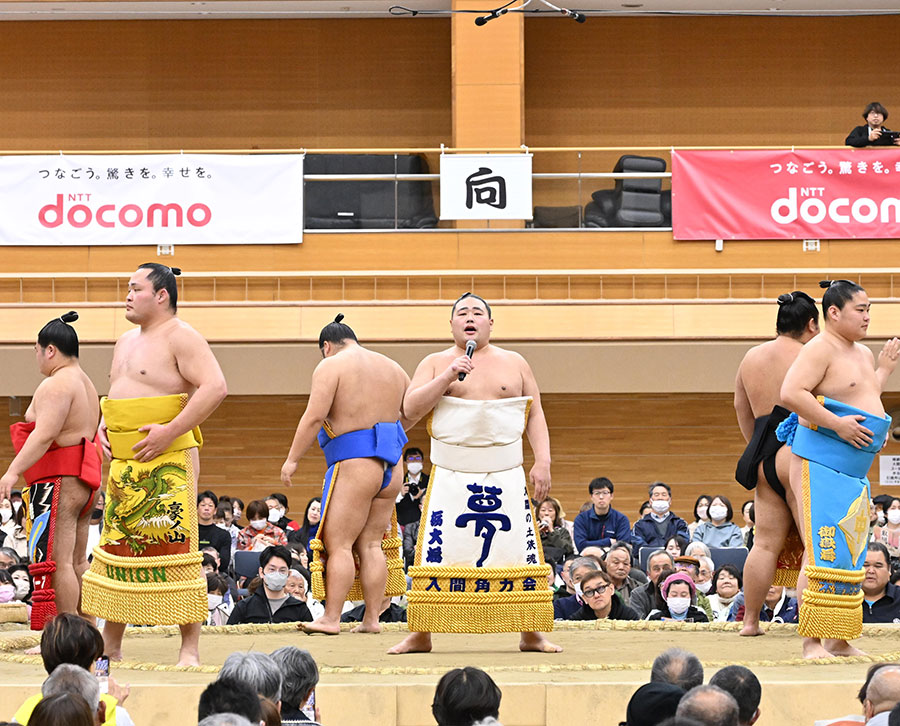
Special performance
The regional tour (jungyo) includes unique performances such as Shokkiri (a type of sumo wrestling demonstration), Sumo Jinku (a type of sumo folk song), Yagura Daiko Uchiwake (a drum performance on a tower), and Kamiyui Jitsuen (a demonstration of the technique of tying the Oicho topknot).
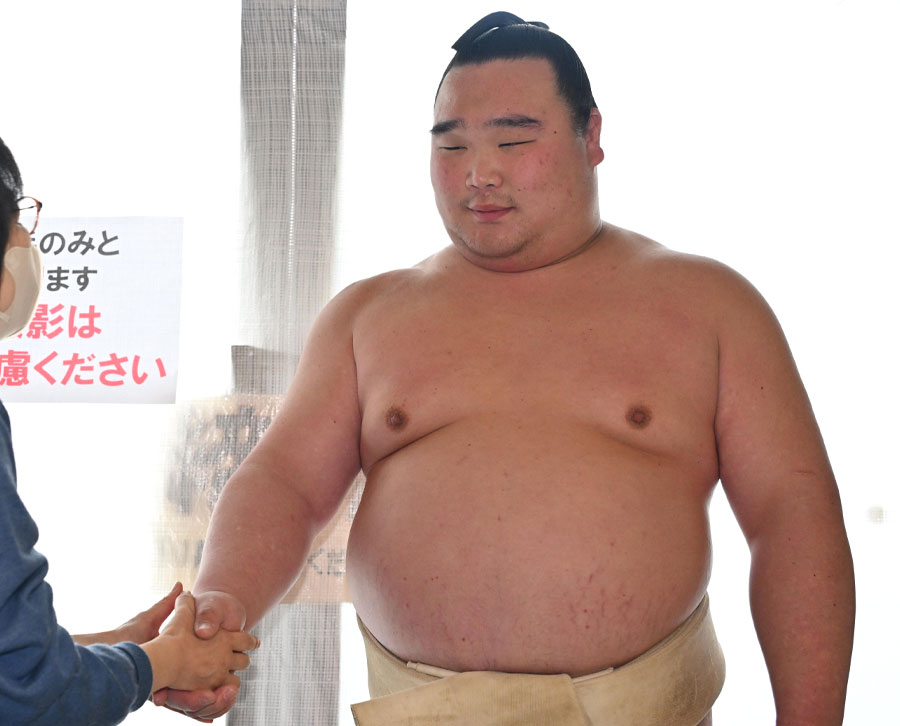
Interaction with sumo wrestlers, such as handshake events.
Ookini Arena Maishima (October 17, 2026), a commemorative handshake event with 4 travelers sumo wrestlers is scheduled (9:00-10:00). This is an event that allows you to enjoy being close to the sumo wrestlers, something that is not available at regular tournaments.
Choose from the tours
-
 OCT 17 · Osaka
Autumn Tour
Grand sumo, Osaka Maishima Venue
displaying)
Switch
OCT 17 · Osaka
Autumn Tour
Grand sumo, Osaka Maishima Venue
displaying)
Switch
-
 DEC 10 · OSAKA
Winter Tour
Grand sumo Sumo Tournament Yao Venue
(Currently displaying)
Switch
DEC 10 · OSAKA
Winter Tour
Grand sumo Sumo Tournament Yao Venue
(Currently displaying)
Switch
Autumn Tour Osaka Maishima Venue (October 17, 2026) Grand Sumo Wrestling Viewing Ticket Package
We offer three seating plans: Tamari S seats, Arena seats, and 2nd floor stand seats A.
- Tickets
- Bento box
Seating chart
The seating at Ookini Arena Maishima is not arranged in concentric circles, but in a rectangular configuration as shown in the diagram below. You can see where the "Tamari S seats" and "Arena chair seats" are located within the venue.
- Ringside Seats S (Tamari)Available These are the front area surrounding the sumo ring on all four sides. Cushion seats.
- Arena Chair SeatsAvailableon the east and west sides of the 1st floor.
- 2nd floor Seat AAvailablein the 2nd floor stands (Section A), locatedin the four corners of the 2nd floor. The view will be from an angle.
- 3rd Floor Stand Chair Seats B Not Available3rd floor, front and back sides. No longer available through us.
- Tamari seats S / 2nd floor Chair seats SS/ 2nd floor Chair seats S Not AvailableThe organizers are selling them, but they are not included in this tour.
- Wheelchair accessible seatingis not available on this tour. Please check availability.
*The seating arrangement is a schematic diagram based on the seating chart released by the organizer. The number of rows, blocks, and orientation may not strictly match the actual seating arrangement.
Ringside seats STAMARI
For those who want to experience the power of sumo up close at ringside.
🎁 Includes a commemorative cushion as a souvenir.
- Location: The four sides of the sumo ring
- Seating style Floor cushion
Arena Chair Seats
For those who want to watch the sumo matches comfortably from a chair, close to the ring.
- Location: 1st floor, east and west sides
- Seating style Chair
2nd Floor Chair seats A
For those who want to enjoy the entire atmosphere of the venue from the four corners of the second floor.
- Location: Four corners of the second floor
- Seating style Chair
*The seats are listed in order of price from highest to lowest (Tamari S seats → Arena chair seats → 2nd floor stand chair A seats). Prices are inclusive of tax and subject to change.
There is a significant price difference between the 2nd floor stand seats (A seats) and the 1st floor seats. Arena seats and Tamari S seats are located on the same 1st floor as the sumo ring, and are on a different floor than the 2nd floor seats. Tamari S seats are in the front area surrounding the sumo ring on the 1st floor and come with a commemorative cushion as a souvenir.
| Ringside Seats S (Tamari) | Arena seating | 2nd Floor Standing Seat A | |
|---|---|---|---|
| floor | 1st floor | 1st floor | 2nd floor |
| position | The four sides of the sumo ring | 1st floor East and West | four corners |
| Seating style | Japanese cushion | chair | chair |
| Commemorative cushion souvenir | Attached | — | — |
| Basic Plan | ¥37,000/person | ¥28,000/person | ¥12,000/person |
Ringside Seats S (Tamari)
- floor
- 1st floor
- position
- The four sides of the sumo ring
- Seating style
- Japanese cushion
- Commemorative cushion souvenir
- Attached
- Basic Plan
- ¥37,000/person
Arena seating
- floor
- 1st floor
- position
- 1st floor East and West
- Seating style
- chair
- Commemorative cushion souvenir
- —
- Basic Plan
- ¥28,000/person
2nd Floor Standing Seat A
- floor
- 2nd floor
- position
- four corners
- Seating style
- chair
- Commemorative cushion souvenir
- —
- Basic Plan
- ¥12,000/person
Venue access: Osaka Maishima venue (October 17, 2026)
Venue: Ookini Arena Maishima
2-2-15 Kitako Ryokuchi, Konohana-ku, Osaka City, Osaka Prefecture 554-0042
A free shuttle bus service is planned from Sakurajima Station (7:30 AM - 1:00 PM, 2:30 PM - 4:00 PM). *Please note that the operating times may change, so please also check the organizer's announcements on the day of the event.
Winter Tour: Yao Venue (December 10, 2026) Grand Sumo Wrestling Viewing Ticket Package
We offer four seating options: Tamari S seats, Tamari A seats, Arena seats, and Stand seats.
- Tickets
- Bento box
Seating chart
The seating at Yao City General Gymnasium “Wing” is arranged in a rectangular layout, not in concentric circles. You can see where the Tamari S Seats, Tamari A Seats, Arena Seats, and Stand Seats are located in the venue.
- Tamari S Seats Available.These seats are located around the sumo ring on all four sides, close to the front row. (Commemorative cushion included)
- Tamari A Seats Available. These are located outside the Tamari S seats (east, west, and south sides). Cushion seats (commemorative cushion included).
- Arena Seats Availableon the east and west sides of the first floor. These are the seats closest to the sumo ring.
- Stand Seats (2nd floor) Available.2nd floor, front side seats.
- Wheelchair accessible SeatsNot availableat the northern end (directly above the sumo ring). It is not included in this tour.
*The seating arrangement is a schematic diagram based on the seating chart released by the organizer. The number of rows, blocks, and orientation may not strictly match the actual seating arrangement.
Ringside seats STAMARI
For those who want to experience the power of sumo up close at ringside.
🎁 Includes a commemorative cushion as a souvenir.
- Location: Around all four sides of the sumo ring
- Seating style Floor cushion
Children of preschool age are not permitted.
Ringside seats ATAMARI
For those who want to watch from a cushion seat, the next best seat after Tamari S.
🎁 Includes a commemorative cushion as a souvenir.
- Location:Outside the Tamari S area (east, west, and south)
- Seating style Floor cushion
For those who want to watch from a cushion seat, this is the next best option after Tamari S.
Arena Chair Seats
For those who prefer chair seating and want to sit as close to the sumo ring as possible.
- Location: 1st floor, outside the east and west sides
- Seating style Chair
Stand seating 2F STAND
For those who want to comfortably watch the matches from a chair with a full view of the venue.
- Location: 2nd floor (front side)
- Seating style Chair
*Stand-seat ticket holders may not enter the arena.
*The seats are listed in order of price from highest to lowest (Tamari S seats → Tamari A seats → Arena chair seats → Stand chair seats). Prices are inclusive of tax and subject to change.
There is a significant price difference between the stand seats (2nd floor) and the other three seat types (1st floor). Tamari S seats, Tamari A seats, and Arena seats are located on the same 1st floor as the sumo ring, and are on a different floor than the stand seats. According to the organizers, customers with 2nd floor seats (stand seats) are not allowed to enter the arena. If you wish to watch from the 1st floor, please consider Tamari seats or Arena seats.
| Ringside Seats S (Tamari) | Tamari A seats | Arena seating | Stand seating | |
|---|---|---|---|---|
| floor | 1st floor | 1st floor | 1st floor | 2nd floor |
| position | The four sides of the sumo ring | Outside Tamari S (east, west, south) | 1st floor, east and west sides | 2nd floor (front side) |
| Seating style | Japanese cushion | Japanese cushion | chair | chair |
| Commemorative cushion souvenir | Attached | Attached | — | — |
| Basic Plan | ¥37,000/person | ¥34,000/person | ¥28,000/person | ¥17,000/person |
Ringside Seats S (Tamari)
- floor
- 1st floor
- position
- The four sides of the sumo ring
- Seating style
- Japanese cushion
- Commemorative cushion souvenir
- Attached
- Basic Plan
- ¥37,000/person
Tamari A seats
- floor
- 1st floor
- position
- Outside Tamari S (east, west, south)
- Seating style
- Japanese cushion
- Commemorative cushion souvenir
- Attached
- Basic Plan
- ¥34,000/person
Arena seating
- floor
- 1st floor
- position
- 1st floor, east and west sides
- Seating style
- chair
- Commemorative cushion souvenir
- —
- Basic Plan
- ¥28,000/person
Stand seating
- floor
- 2nd floor
- position
- 2nd floor (front side)
- Seating style
- chair
- Commemorative cushion souvenir
- —
- Basic Plan
- ¥17,000/person
*Children under school age are not permitted in the Tamari S seats.
*For seats other than the Tamari S seats, children aged 2 and under can watch the game for free if they sit on their parent's lap (a ticket is required if a separate seat is needed).
*Customers with stand seats (2nd floor) are not permitted to enter the arena.
* Bringing high chairs or stools into the Tamari seating area is not permitted.
Venue access: Yao venue (December 10, 2026)
Venue: Yao City General Gymnasium "Wing"
5-24, Aoyama-cho 3-chome, Yao City, Osaka Prefecture 581-0018
15-minute walk from Kawachi-Yamamoto Station on the Kintetsu Osaka Line / 15-minute walk from Takayasu Station on the Kintetsu Osaka Line
If coming by bus: Take the Osaka Bus Yao-Shiki Line (between Kintetsu Yao Station and JR Shiki Station) and get off at "Yao General Gymnasium" bus stop.
A day on regional tour (jungyo)
The tour starts in the morning and ends in the afternoon. The ease with which it can be incorporated into a travel itinerary is one of the attractions of the tour.
Annual Sales Schedule
The tour takes place in various locations throughout Japan. It is held in four seasons a year: spring, summer, autumn, and winter.
| season | date | place | situation |
|---|---|---|---|
| Autumn Tour | October 17, 2026 | Osaka Maishima Tournament |
Now accepting applications Go to reservation |
| Winter tour | December 10, 2026 | Yao Tournament |
Now accepting applications Go to reservation |
| Spring Tour | 2027 (under adjustment) | Under adjustment |
Under preparation |
| Summer tour | 2027 (under adjustment) | Under adjustment |
Under preparation |
*Please note that there is currently no dedicated system for receiving release notifications, so the "Receive Notifications" button is a link to the existing inquiry form. Please feel free to contact us via the inquiry form once the schedule details are finalized.
Knowing this will make sumo even more enjoyable
Basic knowledge of sumo
Highlights of the Regional tour (jungyo)
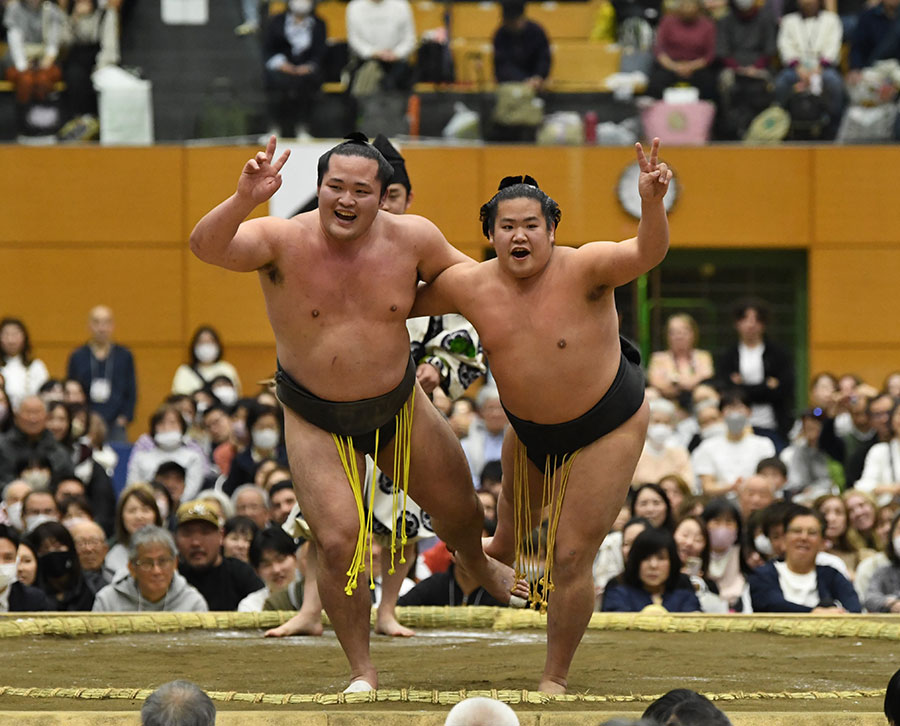
Shokkiri
The "Shokkiri" is a unique performance only seen on regional tours, where wrestlers intentionally use forbidden techniques in sumo. Two wrestlers from the lower ranks enter the ring and perform a series of actions that would normally be considered fouls, such as kicking, punching, grabbing each other's hair, and splashing each other with water. The referee then intervenes, calls out the fouls, and orders the match to be restarted. This entertainment, which has been around since the Edo period, is designed to be humorous while naturally teaching what is forbidden in sumo and what is a valid technique. It is especially recommended for those seeing sumo for the first time.
Sumo Jinku
"Sumo jinku" are unique songs sung by sumo wrestlers. They are sung without musical accompaniment, accompanied by interjections such as "Hoi" and "Dosukoi." Originally popular from the late Edo period to the Meiji era, these jinku are said to have been spread to various regions by sumo wrestlers during their tours. The songs are sung by sumo wrestlers with impressive voices, selected from each stable, and are now a required subject at sumo training schools for new wrestlers. The leisurely melody resonates throughout the venue, a stark contrast to the intensity of the matches.
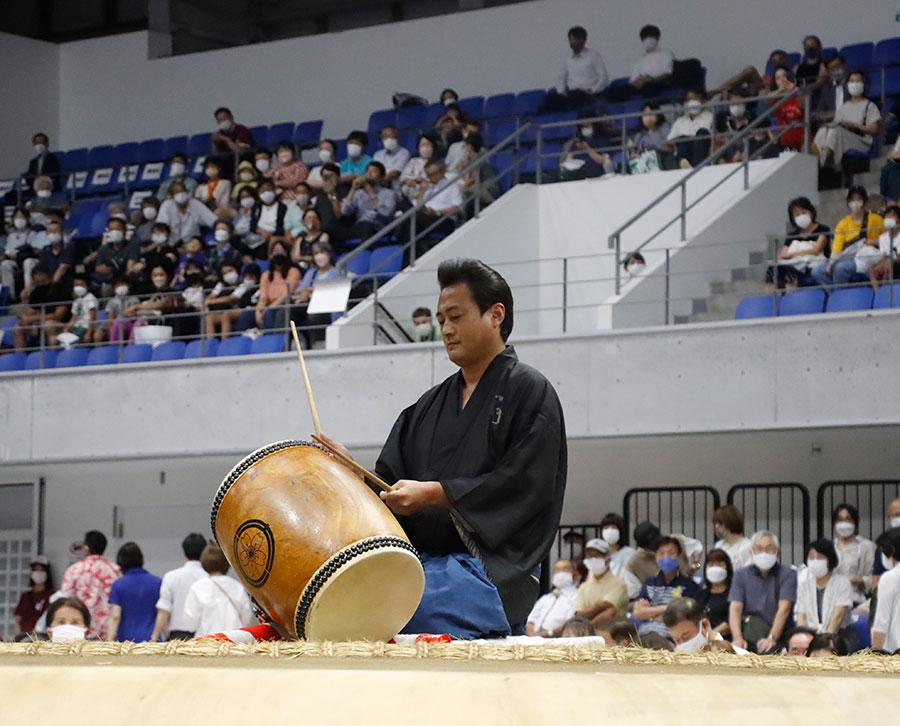
Yagura daiko uchiwake
"Yagura daiko" is a drum beaten by the yobidashi (sumo announcer) to signal the start of a sumo tournament. There are different types of drums depending on their role: the "Yose Taiko" is beaten in the morning to welcome guests, the "Ichiban Taiko" is beaten when the sumo wrestlers enter the arena, and the "Hane Taiko" is beaten to signify that all the matches for the day are over and to invite people to come again tomorrow. At official tournaments, the drums are beaten from a tower (yagura) in the arena, but on tour, the different types of drumming are demonstrated up close. It's a great opportunity to compare the differences in sound.
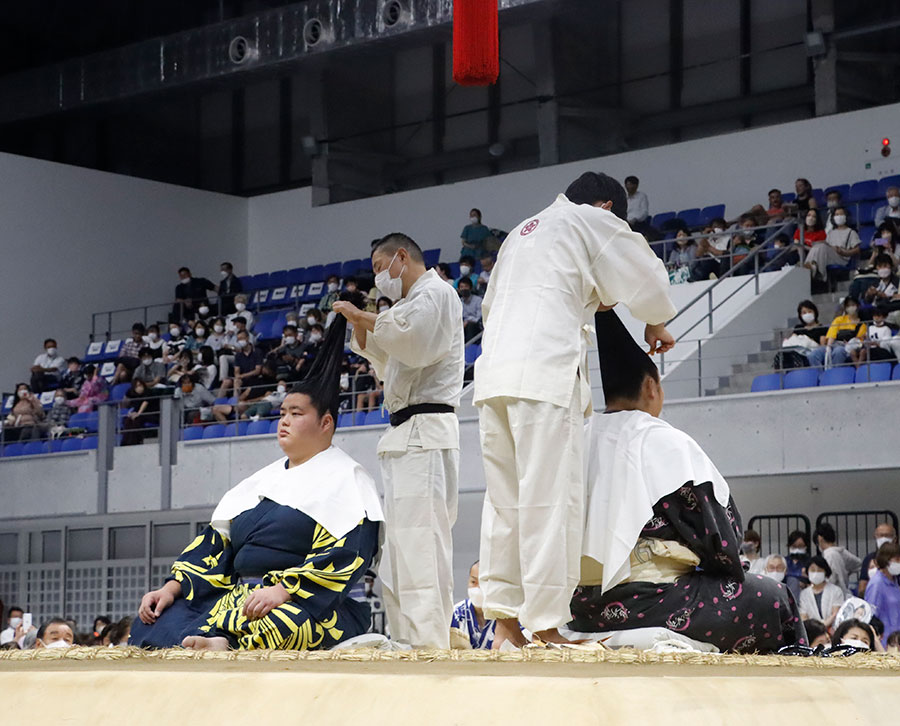
Topknot-tying demonstration / The oicho topknot
The hair-tying demonstration is an event where you can see firsthand the work of a "tokoyama," the hair stylist for sumo wrestlers. The style they create is the "Oicho," named for the way the topknot spreads out like a ginkgo leaf. The tokoyama applies solid hair oil to the hair and then uses a hair styling tool and comb to shape it. The process takes anywhere from 5 minutes to 30 minutes. The Oicho is the formal hairstyle worn by sumo wrestlers of the Juryo rank and above during matches; they wear a chonmage (a shorter topknot) during practice. You can see the craftsman's handiwork up close, something you don't usually get to see.
Sumo viewing points and highlights
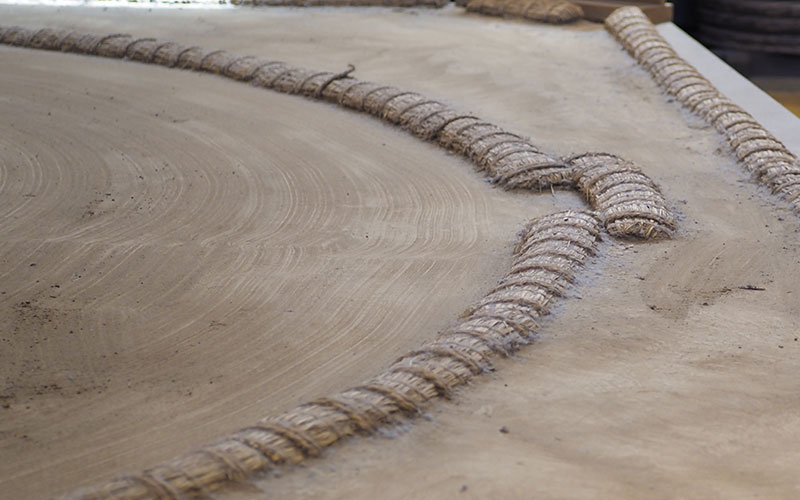
Sumo rules
Sumo is a traditional Japanese martial art in which two wrestlers compete in a circular ring with a diameter of approximately 4.55 meters.
The rules are very simple: the one who pushes the opponent out of the ring or touches the ring with any part of their body other than the soles of their feet loses.
The match begins with a moment called "tachiai," when the wrestlers collide and exchange techniques.
Representative techniques include "push out," "yorikiri," and "uwade nage," and sumo wrestlers fight to make the most of their physique and special skills.
There are some actions that are prohibited, such as pulling hair, punching, or poking in the eyes, which are considered "forbidden moves" and will result in a foul.
Before the match, there is a staring contest called "shikiri," and the wrestlers perform a ritual that involves sprinkling salt to purify the ring.
These actions are imbued with sacred meaning, and sumo is not just a sport, but also has an aspect of traditional culture.
Even beginners can enjoy the techniques and tactics of the wrestlers by learning the rules.
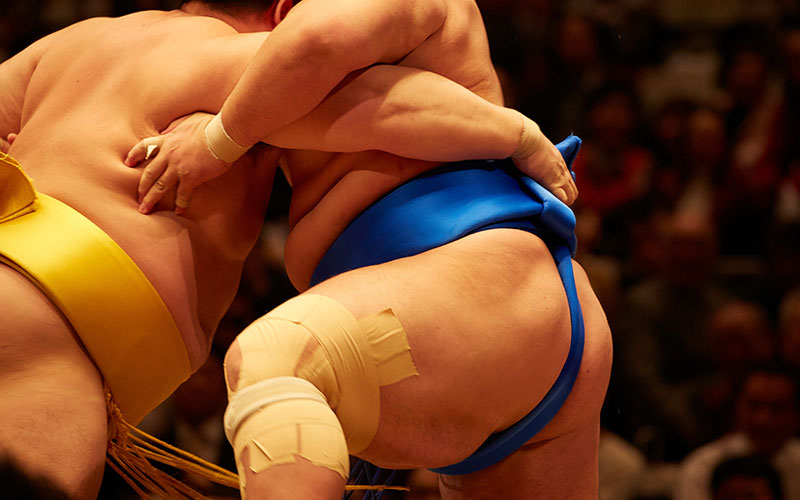
Sumo techniques
Sumo's "techniques" are the movements and tactics that wrestlers use to win, and are one of the highlights of the match.
It's not just a simple push and shove match; there are over 80 different ways to win, and the appeal lies in the tactics of strength and skill.
For example, "oshidashi" is a technique in which you push your opponent straight out of the ring, while "nagewaza" is a technique in which you twist your opponent's body to knock them down.
"Tsuridashi" is a spectacular technique in which the opponent is lifted up and carried, and there are times when it overcomes differences in physical size.
A small sumo wrestler can defeat a larger opponent with quick movements, so not only physical strength but also explosive power and judgment are important.
Knowing the types of techniques and how to use them will give you a much deeper perspective on the match.
Ring-entering
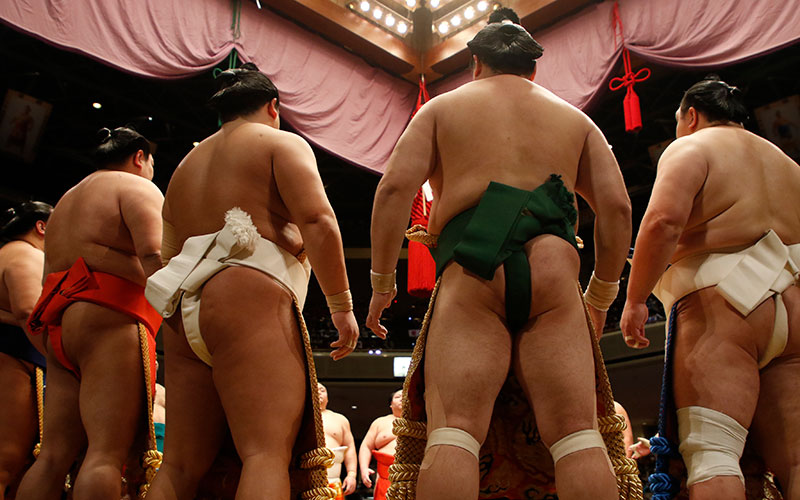
The "Dohyo-iri" in Grand Sumo is a traditional ceremony performed by sumo wrestlers on the sumo ring before a match.
This applies to sumo wrestlers of the rank of Juryo or higher (Sekitori), and it serves to show their faces to the audience and demonstrate respect in a sacred setting.
The sumo wrestlers, adorned with elaborate ceremonial aprons, step onto the sumo ring, led by the referee.
They are divided into east and west sides and line up in a circle, performing actions such as clapping their hands and raising both hands.
This is also a symbol of peace, indicating that they "do not possess weapons."
Only the Yokozuna performs a special "Yokozuna Ring-Entering Ceremony" alone, accompanied by a dew sweeper and a sword bearer, and performs the stomping ritual and demonstrates the forms.
The ring-entering ceremony is a moment where one can feel the dignity and formality of the sumo wrestlers, and it is a ritual that symbolizes the sacredness and beauty of sumo.
Even first-time viewers can appreciate the charm of sumo more deeply by learning about the meaning behind the dignified appearance and movements of the sumo wrestlers.
Sumo wrestler ranks
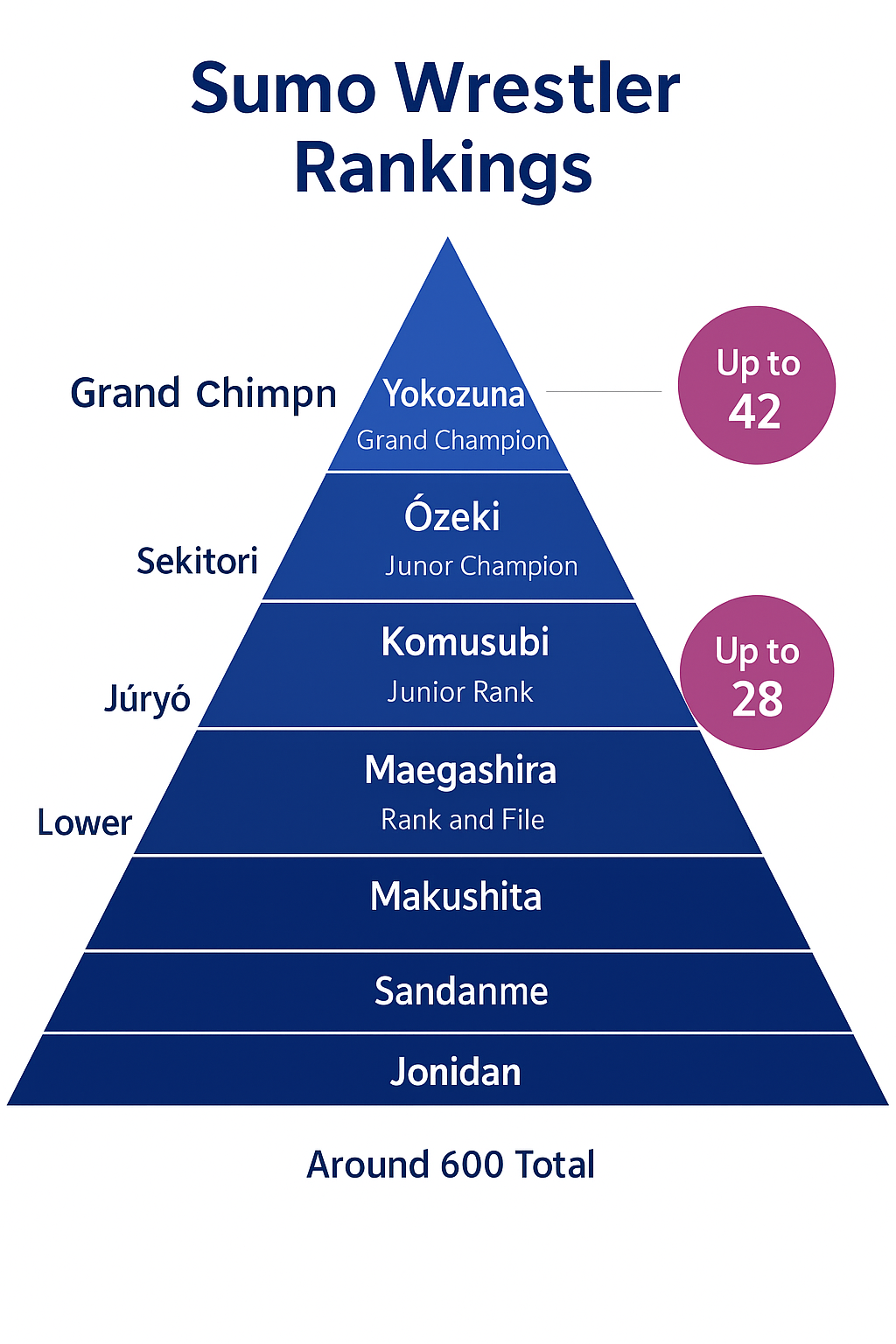
Sumo wrestlers are ranked according to a hierarchy called "banzuke."
The highest rank is "Yokozuna," and only those who are recognized for their dignity and ability can be promoted.
Next come the ranks of "Ozeki," "Sekiwake," "Komusubi," and "Maegashira," and these are collectively called "Makuuchi wrestlers."
"Makuuchi wrestlers" are broadcast on television, so they become more well-known.
Below the Makuuchi rank is the Juryo rank, and the sumo ranks of Ozeki, Sekiwake, Komusubi, Maegashira, and Juryo are all combined to form the Sekitori rank.
Sekitori are paid a salary and compete every day for 15 days at each tournament.
Below the "Juryo" rank are the "Makushita," "Sandanme," "Jonidan," and "Jonokuchi" ranks, which are the ranks for young wrestlers and newcomers.
There is no salary, and each location will have 7 days of competition out of 15 days.
Wrestlers are promoted by having more wins than losses, and demoted by having more losses than wins.
The rankings are updated at each of the six tournaments held each year to reflect the results.
This ranking system requires wrestlers to not only demonstrate technique, but also consistent performance and mental strength, and they work hard to reach the top.
Etiquette and rituals before a sumo match
SHIKO
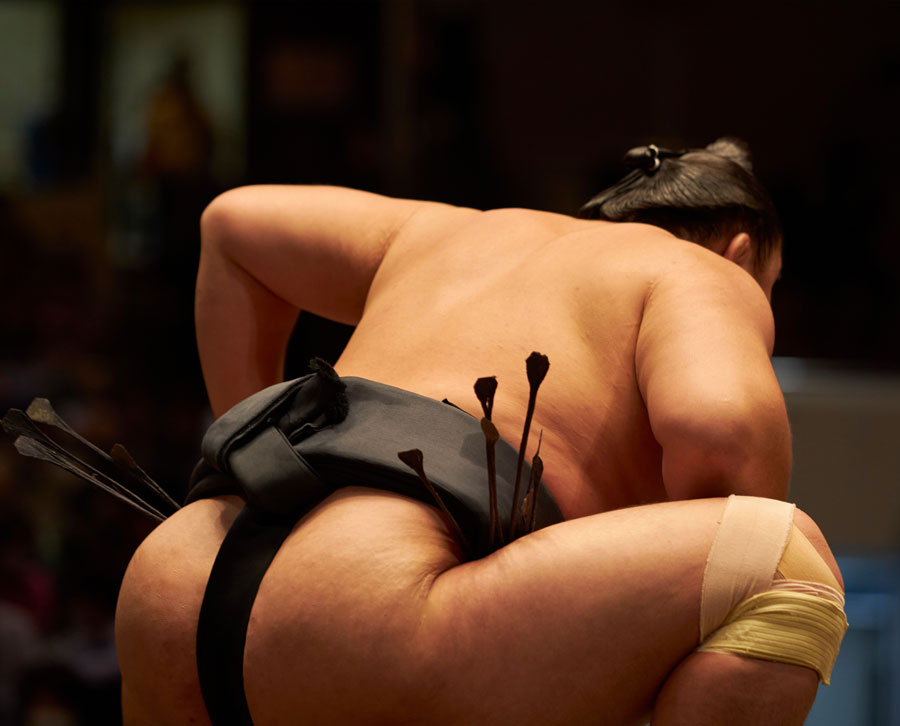
"Shiko" is the movement in which a sumo wrestler raises one foot high in the air and then stomps down on the ring. It is a basic training method in sumo and also a sacred gesture.
It is meant to ward off evil spirits and also serves a ritualistic role in purifying the ring.
In addition to its practical benefits of developing muscle strength and flexibility, it is also important as a symbol of mental unity and good manners.
By performing shiko before a bout, wrestlers prepare their minds and bodies, show respect for the ring, and prepare for the match.
CHIKARA MIZU
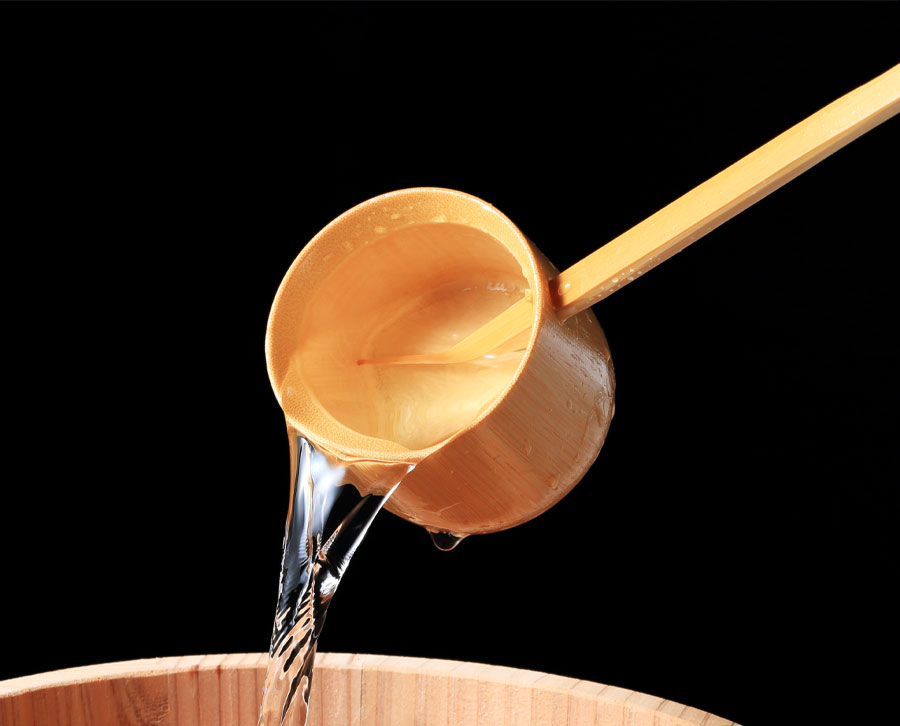
"Chikara Mizu" is water that sumo wrestlers use to rinse their mouths before a match, and is a sacred ritual that signifies purification.
This is a ritualistic act to purify the body and mind and ward off evil spirits, and is a tradition unique to sumo, which is influenced by Shinto.
The wrestler on the winning side receives the water; the loser does not have the right to receive it.
The series of actions from entering the ring to starting the match are deeply rooted not only in the competition but also in etiquette and spirituality.
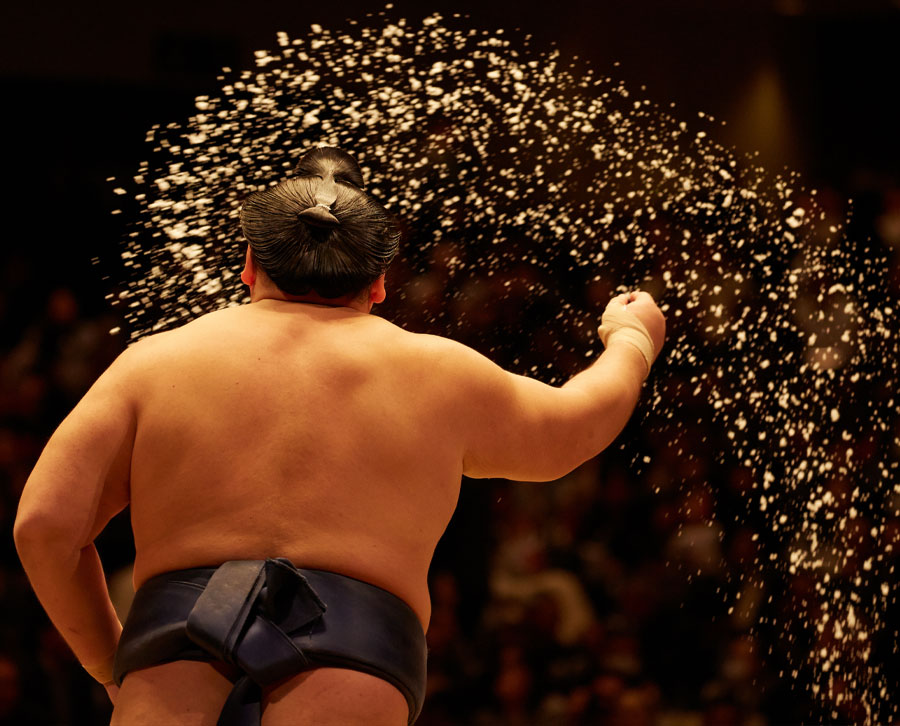
SHIO WO MAKU
"Shio wo maku" is the ritual in which sumo wrestlers sprinkle salt on the ring before the start of a match, purifying the ring and preventing injury.
This is based on the Shinto idea of purification, and by purifying the sacred ring, the wrestlers prepare both their bodies and minds for the match.
Sprinkling salt on the ground, where people are particularly prone to injury, also serves as a prayer for safety.
It is a symbolic gesture that heightens the tension before the match and is a moment that captures the attention of the audience.
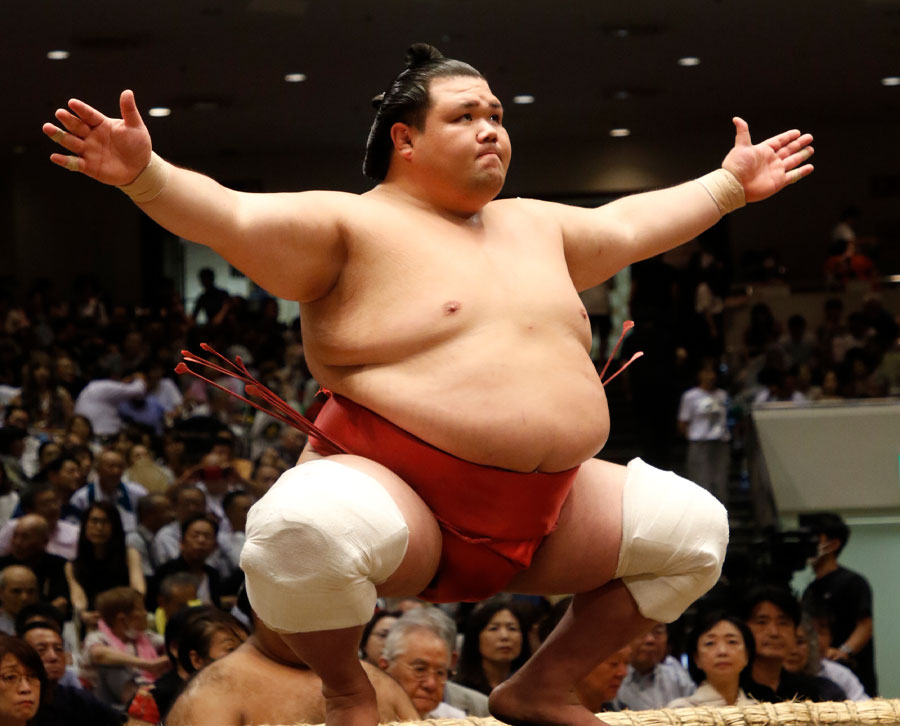
CHIRI WO KIRU
"Chiri wo kiru" is a gesture that sumo wrestlers perform before the start of a match, in which they spread their arms out and then bring them back to their waists.
This signifies "not carrying a weapon" and originates from ancient etiquette.
It is a symbolic move that shows the wrestlers' determination to compete fairly, and it is also a moment of heightened tension for the spectators.
Every action on the ring has meaning, and "cutting the dust" is a ritualistic movement that evokes a particularly spiritual feeling.
FAQ
Q. What is a regional tour (jungyo)?
In addition to the official tournaments (held six times a year in Tokyo, Osaka, Nagoya, and Fukuoka), these are sumo tours where wrestlers travel around the country. While the official tournaments last 15 days, the tours are completed in just one day at each venue. Highlights include the opportunity to watch training sessions and special performances not found in the official tournaments.
Q. What time should I go to see the practice?
Ookini Arena Maishima (October 17, 2026), a public rehearsal (including a fun segment) will be held from approximately 9:00 to 11:00. Please note that times may differ on other dates and venues, so please also check the organizer's announcement.
Q. What time will it finish?
Ookini Arena Maishima (October 17, 2026), the bow-wielding ceremony and shooting will conclude around 2:30 PM. Times may differ at other dates and venues, so please also check the organizer's announcements.
Q. Which should I watch, this or the main tournament?
Each type of sumo offers a different way to enjoy the sport. For those who want to see a full 15-day tournament, a main tournament is recommended. For those who want to enjoy a day of sumo, including practice sessions and special performances, or if you are in a region or time of year when main tournaments are not held, a sumo tour is recommended. Please refer to the comparison table above for more detailed differences. Packages that include tickets to watch the 15-day main tournament are available on Grand sumo Main Tournament Viewing Tour page.
For those who want to witness 15 days of intense competition: Grand sumo Tournament ticket package
View Grand sumo Tournament Viewing Tours